How NUCD is redesigning digestive care pathways
Published on 22 January 2026
NUH’s National University Centre for Digestive Health (NUCD) redesigns pathways to shorten waits, strengthen prevention and deliver treatment closer to home.
At a glance
- NUCD redesigns digestive care so patients can move faster from first consultation to specialist and surgical expertise, often on the same day.
- Stronger ties with polyclinics and GPs support earlier detection and clearer referral pathways for higher-risk patients.
- Home administration of intravenous biologics shows how coordinated care can reduce hospital visits for patients with long-term conditions.
Digestive care often involves multiple assessments and specialties, reflecting the complexity of these conditions. At the National University Hospital (NUH), a new approach is bringing these elements together by redesigning how care flows across disciplines.
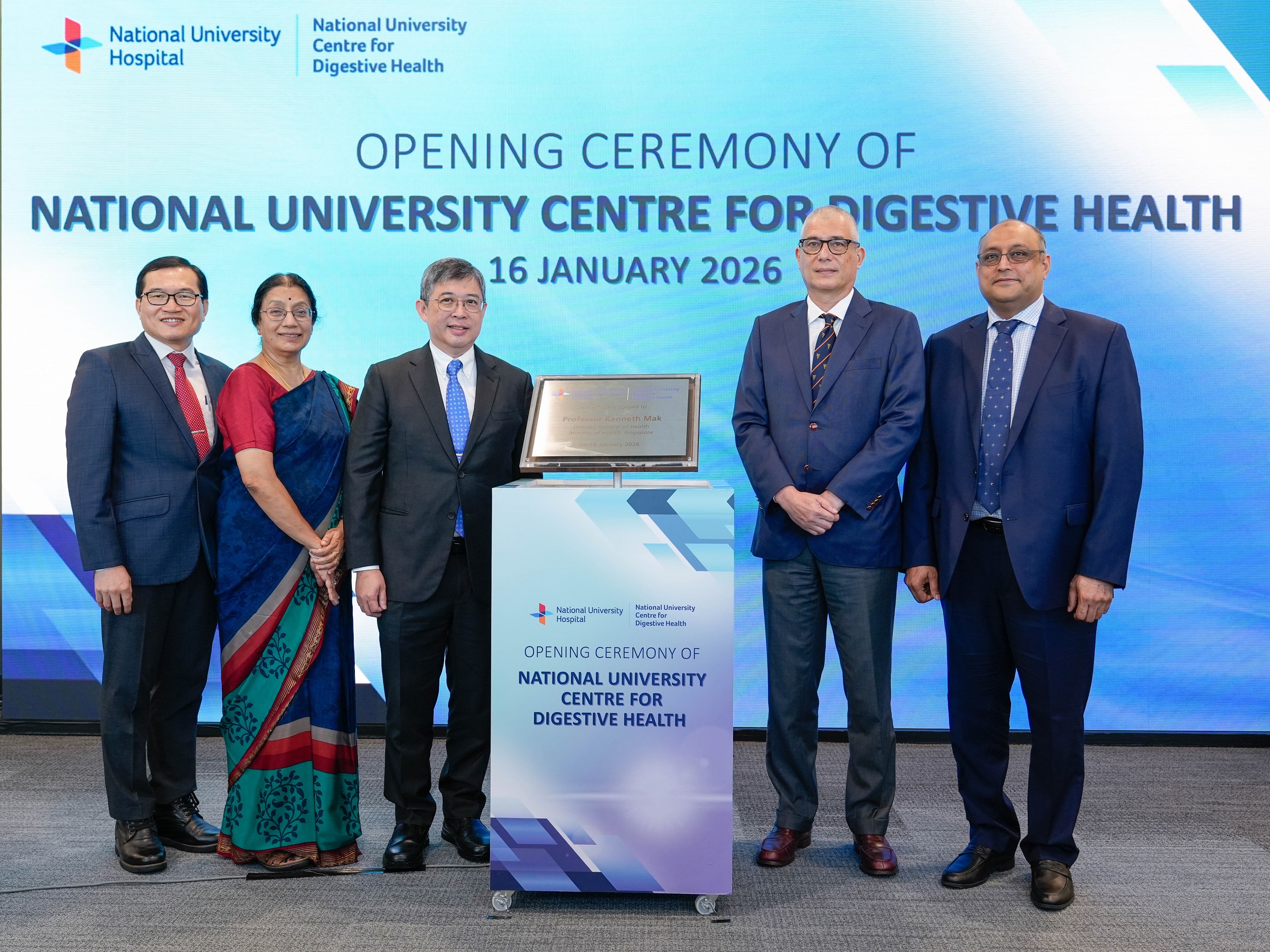
The National University Centre for Digestive Health (NUCD) focuses on strengthening the entire care pathway, allowing patients to move more smoothly from an initial digestive consultation to specialist and surgical expertise when needed.
Under this model, gastroenterologists work more closely with Upper Gastrointestinal, Hepatobiliary and Pancreatic, and Colorectal surgeons, enabling patients to see the right specialists on the same day. By compressing these steps, the approach reduces repeated visits, shortens waiting times and supports faster treatment decisions.
Adj A/Prof Lee Guan Huei, Centre Director of NUCD, said the aim was to redesign care around how patients move through the system, rather than around individual services.
“By bringing together advanced diagnostics, specialist expertise and cutting-edge technology, we aim to deliver care that is faster, more precise and patient-focused,” he said.
“Our goal is simple – to detect problems early, treat them well and help our patients live healthier lives.”
Prevention begins before hospital care
Many digestive diseases first present in primary care, where symptoms may be vague or mistaken for common ailments. NUCD therefore places strong emphasis on prevention and early intervention beyond the hospital setting.
Through partnerships with polyclinics and general practitioners, clearer referral pathways help identify patients who may be at higher risk and require specialist assessment sooner. At the same time, patients with stable conditions can be managed safely in the community, reducing unnecessary hospital visits.
This closer integration supports earlier detection of chronic digestive and liver diseases, allowing intervention to begin before complications develop and improving long-term outcomes.
How NUCD strengthens prevention
|
A life-changing diagnosis
For patients with complex digestive conditions, long-term treatment often involves repeated hospital visits that can disrupt daily life.
Mr Anson Hoo was diagnosed with ulcerative colitis in 2020 at the age of 19 after persistent bouts of diarrhoea and fatigue, coupled with a sudden weight loss of 10kg. Further investigations later revealed primary sclerosing cholangitis, a rare autoimmune condition affecting the bile ducts in the liver that requires ongoing monitoring.
To control inflammation from his ulcerative colitis, Mr Hoo requires regular intravenous infusions of vedolizumab, a biologic drug used when standard treatments are insufficient.
“I would go to the toilet almost immediately after I ate and my stools were very watery,” he recalled of the symptoms that led him to seek medical help.
Managing complex conditions over the long term
While there is no curative treatment for primary sclerosing cholangitis, careful monitoring is essential. Mr Hoo’s physician, Dr Bernice Tan, Consultant, Division of Gastroenterology and Hepatology, NUH, described his care as requiring a two-pronged approach.
“Unfortunately, there is no cure for PSC right now. So for that, we are tracking his liver function closely,” she said.
“The ultimate cure would be a liver transplant, and he is on the waiting list,” she added.
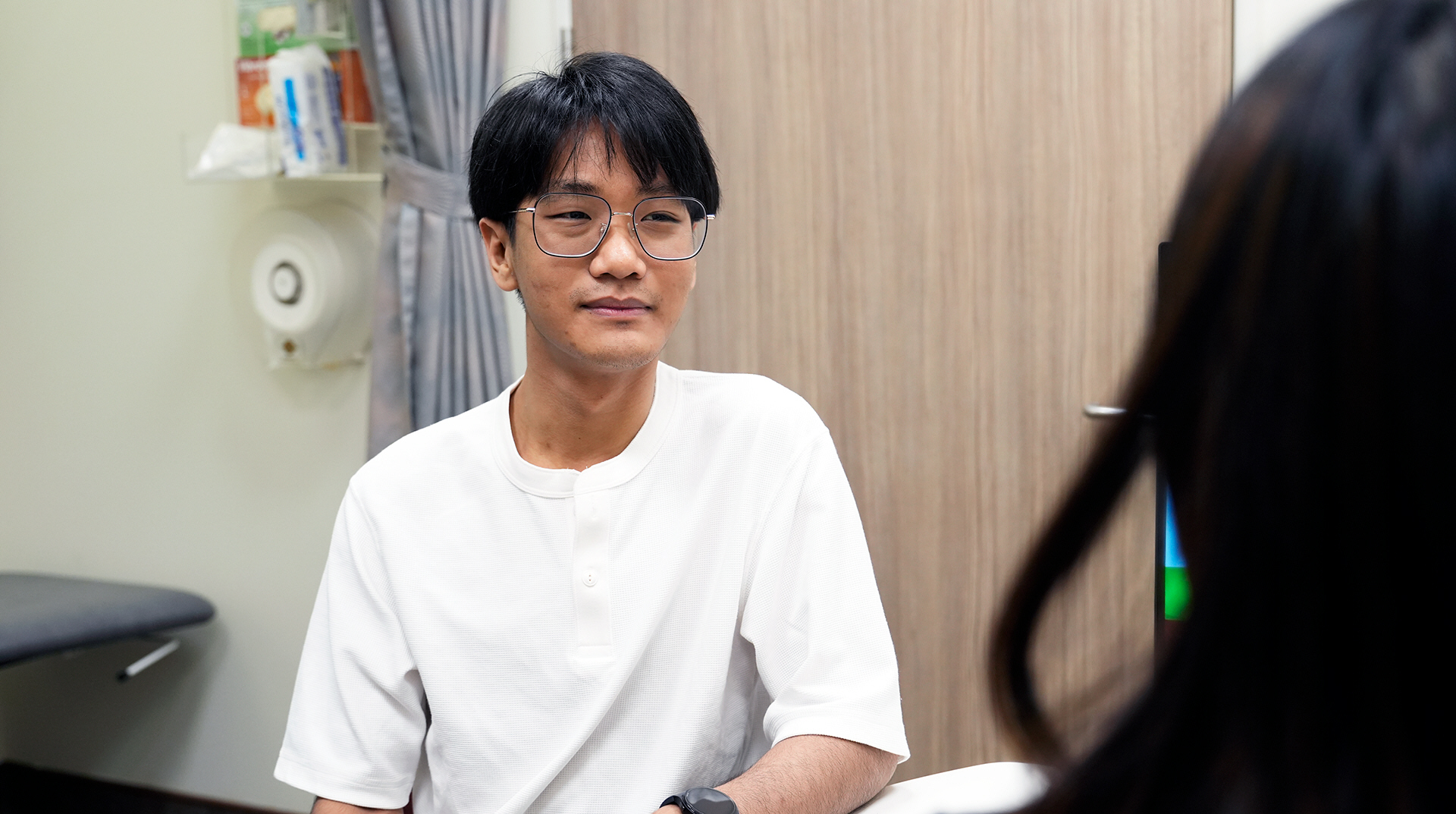
Mr Hoo’s ulcerative colitis was initially managed with oral medication before treatment was escalated to vedolizumab. At the start, infusions were given more frequently, sometimes weekly, before being spaced out to once every two months as his condition stabilised.
Reducing the burden of treatment
Previously, receiving these infusions in hospital often required up to two days once admission, monitoring and recovery were taken into account.
“I would be admitted around 4pm the day before for blood tests. The next day, the infusion would take about 30 minutes, and I would then be observed for a few hours,” Mr Hoo said.
“The hospital tried to make it as conducive as possible by allowing me to take my classes online, but it was still challenging,” he added.
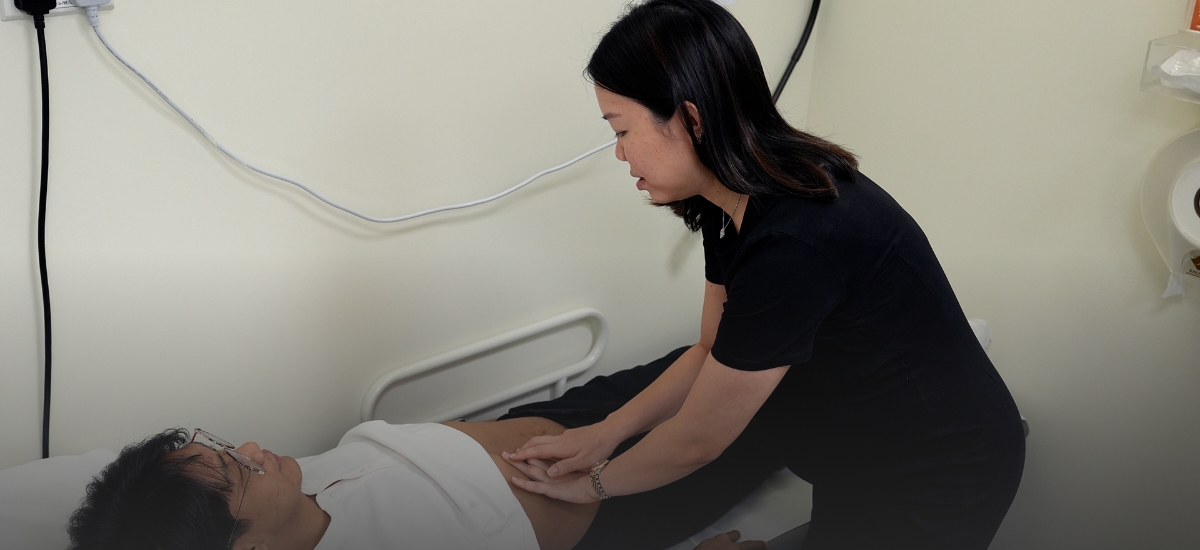
In 2024, he transitioned to a home administration of intravenous biologics programme, which allows selected patients to receive treatment at home under nursing supervision. Blood tests are conducted before each infusion to ensure it is safe to proceed, after which medication and equipment are delivered to the patient’s home.
Although he still feels fatigued after treatment, being able to rest at home has reduced the physical and logistical strain associated with hospital visits. The change has also helped him manage his studies with fewer disruptions.
“I can still do everything I want, except drink alcohol,” he said. “I already manage my diet quite carefully, so that hasn’t been a big change,” he added.
Care redesigned around patients
Home administration of intravenous biologics reflects a broader shift in how NUH delivers care for patients with complex, long-term digestive conditions. When monitoring, logistics and specialist input are coordinated, treatment no longer needs to be hospital-centric.
“Previously, the biologics programme was managed across different departments,” Dr Tan said. “It often fell to one person to coordinate logistics, which placed a lot of pressure on the system."
With NUCD, a dedicated team now oversees this process, making care delivery more sustainable while maintaining safety standards.
Beyond treatment, the centre continues to strengthen collaboration with primary care, ensuring patients who need urgent specialist input are seen sooner.
“The goal is earlier triaging,” said Dr Tan. “If patients have worrying symptoms, they can be seen much sooner, not months later.”
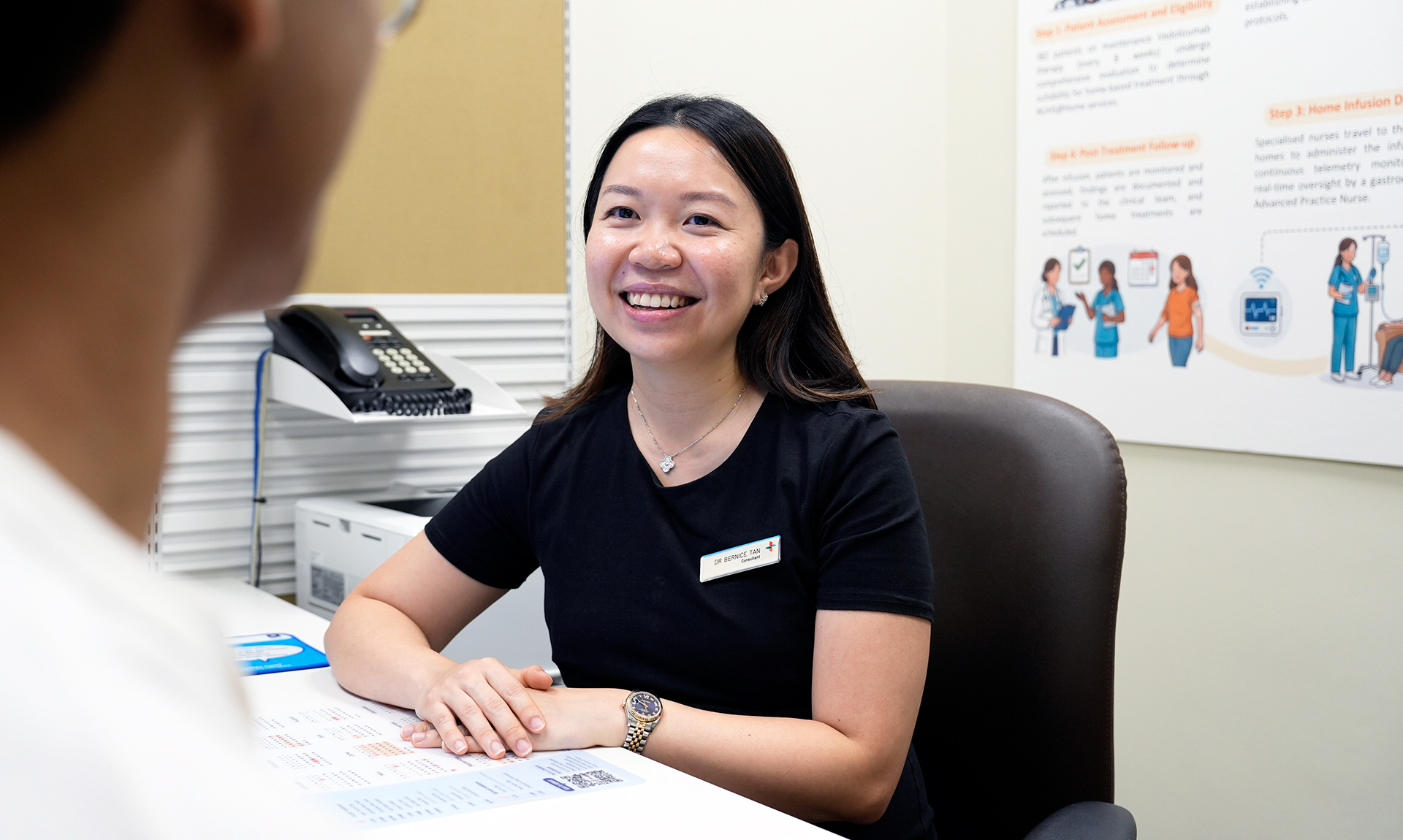
As digestive diseases increasingly become chronic rather than episodic, NUH clinicians said care models must adapt. Faster access to expertise, stronger prevention in the community and flexible treatment delivery are central to helping patients live, study and work alongside long-term illness.
|
What the NUCD means for patients
|
In consultation with Adj A/Prof Lee Guan Huei, Centre Director, NUCD, and Head and Senior Consultant Division of Gastroenterology and Hepatology, Department of Medicine, NUH; and Dr Bernice Tan, Consultant, Division of Gastroenterology and Hepatology, NUH.
Related Articles