.png?sfvrsn=b879280e_1)
Why your brain needs time to catch up after a holiday
Published on 25 December 2025
If returning to work feels harder than expected, you are not alone. Post-vacation blues are a normal part of the brain’s adjustment process.
Picture this: you return from a holiday well-rested and well-fed, with a phone full of photos you promise you will one day organise.
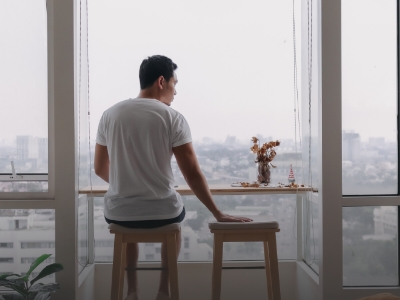
But as you ease back into your daily routine, you realise that instead of feeling refreshed, there is a heaviness in your chest. The feeling grows stronger the closer you get to returning to work.
Does this sound familiar?
This emotional dip, known as post-vacation blues, can feel unsettling, but it is common and not a cause for concern.
“This reaction surprises many people,” said Mr Loo Wee Shyon, Senior Clinical Psychologist at National University Polyclinics (NUP). “But post-vacation blues are not a sign that something went wrong. Instead, they’re a sign that your brain is adjusting back to your usual routine.”
Post-vacation blues describe a short-term shift in mood after time away from everyday demands. Psychologically, it is less about where you went, and more about the contrast between freedom and structure.
What post-vacation blues feel like
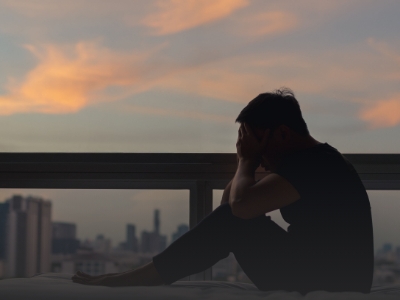
Post-vacation blues tend to appear quietly. You may notice a low mood, reduced motivation, difficulty concentrating or irritability, sometimes even before your holiday ends. Tasks can feel heavier than usual, and fatigue is common even when you are sleeping enough.
“People often say, ‘Nothing is wrong, but everything feels harder,’” Mr Loo noted. “That is a very classic description of post-vacation blues.”
These feelings are common and usually short-lived. They do not mean your holiday failed or that something is wrong.
Why holidays can leave us feeling low
During holidays, people often experience more autonomy, novelty and rest. These conditions activate the brain’s reward system, which increases dopamine and lifts moods.
“When novelty and choices for new experiences are high, the reward system lights up,” Mr Loo elaborated. “When that suddenly disappears, the drop can feel uncomfortable.”
When routine resumes, dopamine levels fall while stress hormones such as cortisol may briefly rise. In addition, the brain shifts into planning, self-control and productivity mode.
“This isn’t unhappiness,” Mr Loo emphasised. “It’s your nervous system recalibrating.”
The effects of post-vacation blues can hit some harder than others. Its intensity varies depending on a person’s baseline stress, burnout, sleep disruption, personality traits and job satisfaction.
Highly enjoyable holidays can intensify this contrast, while travel fatigue and poor sleep can further slow recovery.
Returning to routine can also activate the body’s stress-response systems. Cortisol and adrenaline may rise briefly, while brain regions involved in planning and organisation become more active and reward-related activity decreases.
“This change is adaptive,” said Mr Loo, “but adaptation takes energy, and during that window people often feel slower or flatter.”
Is it simply about work, or something deeper?
For many people, post-vacation blues are not just about work stress. Time away can create space for reflection, which may reveal misalignment with personal values or uncover unrecognised burnout.
“Vacations remove the noise,” Mr Loo explained. “When routine returns, unresolved issues can feel louder.”
However, if low mood or a sense of meaninglessness lasts for weeks, this may signal early burnout rather than a temporary adjustment dip.
Another common factor that can amplify dissatisfaction is social media, especially when people see curated holiday images on various platforms. According to Mr Loo, this can lead to unfavourable and often unfair comparisons with their own experiences.
“When you scroll through highlight reels, your brain starts rewriting your own memories,” he shared.
“Viewing curated, highlight-reel experiences amplifies the idea of a ‘perfect holiday’. This can trigger comparisons that make us believe our own trip was inadequate or somehow fell short. The effect is that we internalise others’ experiences, which can fuel the fear of missing out and the sense that real life is less enjoyable.”
Easing back into daily routine
To ease the transition back to daily life and work, Mr Loo advised starting small. This can include planning for lighter workloads, limiting meetings or even scheduling a day or two off during the first one to three days after a holiday.
These adjustments help to reduce stress and allow the brain to re-establish routines more comfortably.
“Think of re-entry like landing a plane,” said Mr Loo. “You descend gradually, not suddenly. But if symptoms persist beyond two to three weeks, consider seeking professional support.”
At the end of the day, post-vacation blues reflect a real psychological adjustment and the brain can be dramatic about losing novelty.
“It can feel like your brain has left the building,” Mr Loo said with a laugh. “It’s still on the beach.”
“But it’s perfectly fine to miss your holiday. It means your nervous system enjoyed the rest. What you need to do is normalise the feeling and remind yourself that a dip is normal after going back to your routine.”
After all, your suitcase may be unpacked, but your brain might still be waiting at baggage claim. You just need to give it a little time to catch up.
In consultation with Mr Loo Wee Shyon, Senior Clinical Psychologist, NUP.
Related Articles