A new role for AI in speech rehabilitation
Published on 11 November 2026
Could AI bring rehabilitation beyond the clinic? NUHS is evaluating AISay to support recovery at home while complementing therapists’ care.
Between therapy sessions, patients practising speech exercises at home may be unsure whether they are using the techniques correctly.
AISay, an artificial intelligence (AI) app being developed by the National University Health System (NUHS), in collaboration with Synapxe, aims to bridge this gap by providing feedback during independent practice and recording patients’ progress for therapists to review.
Designed for people with dysarthria, a condition that can occur after a stroke and affect speech clarity, AISay could help extend rehabilitation beyond scheduled appointments. This gives patients more opportunities to practise while keeping therapists connected to their progress.
For Dr Elvina Tay, Consultant, Department of Post-Acute & Continuing Care, Jurong Community Hospital (JCH), this support could begin even before patients return home. AISay can help patients make use of time outside scheduled therapy sessions for additional practice in hospital, and continue that practice after discharge.
Building speech habits through practice
For speech exercises to be effective, patients need to apply the techniques introduced by their therapist. “Dysarthria rehab is essentially about forming new habits in response to unclear speech,” explained Mr Jarrod Lee, Speech Therapist, Ng Teng Fong General Hospital (NTFGH).
For instance, someone working on clearer pronunciation may focus only on slowing down. Without feedback on how they are forming the words, repeated practice may reinforce an approach that does not address the difficulty being targeted.
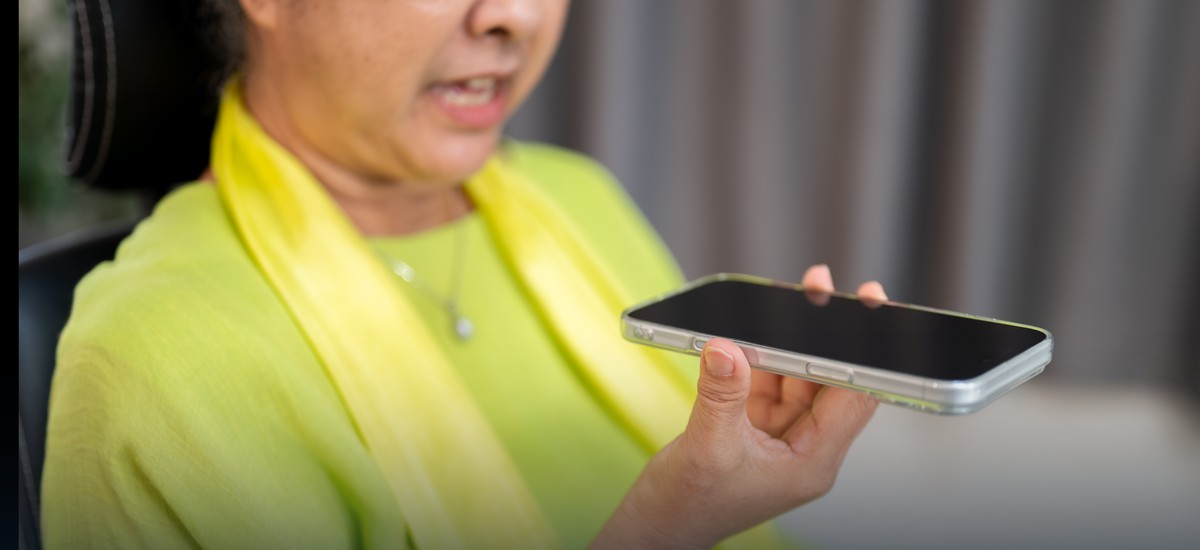
AISay is designed to provide guidance at these points of uncertainty. In its early version, patients say a sentence aloud and receive simple feedback to guide their next attempt. Their practice and progress are also recorded for their therapist to review.
Connecting practice at home with care
The information collected between appointments could give therapists a clearer picture of how patients are practising in their daily lives.
Thereafter, therapists can review practice frequency and duration, the feedback provided by AISay, speech recordings and progress reports. These insights will help therapists to identify areas of difficulty and adjust exercises or practice sentences during subsequent sessions.
However, technology does not replace the therapist’s role. As Dr Tay explained, therapists will continue to assess patients, set their rehabilitation goals and tailor therapy to each individual’s needs.
Supporting recovery beyond supervised sessions
With this support in place, AISay could enable patients to practise independently while allowing therapists to focus on areas that require direct clinical input.
Speech therapists will have more time to support patients who require specialised care, such as assessment and management of swallowing difficulties.
This approach reflects the focus of NUHS’s Healthcare Workforce of the Future, on using technology to support care delivery and make better use of healthcare professionals’ time. Rather than replacing therapist-led rehabilitation, AI could help extend the reach of care into the time between appointments and into patients’ homes.
For Dr Tay, her vision is for rehabilitation to become part of patients’ everyday lives, “so that every opportunity to practise becomes another opportunity to recover”.
In consultation with Dr Elvina Tay, Consultant, Department of Post-Acute & Continuing Care, JCH, and Clin Asst Prof, Department of Medicine, NUS Yong Loo Lin School of Medicine (NUS Medicine); and Mr Jarrod Lee, Speech Therapist, NTFGH.

|
Related Articles