Automated booths cut hearing test waits at NTFGH
Published on 29 July 2026
Demand for hearing tests has more than doubled in a decade, and new automated booths at NTFGH are cutting waiting times and costs while freeing audiologists.
At a glance
- Demand for hearing tests at NTFGH more than doubled over the past decade.
- Wait times fell from 42 days to 18 days after automated booths were introduced.
- Time spent on routine tests was reduced, allowing audiologists to focus on more-complex care.
Demand for hearing tests at Ng Teng Fong General Hospital (NTFGH) has more than doubled over the past decade.
Annual testing volume rose from 2,991 in 2015 to 6,762 in 2025, before plateauing as existing testing capacity reached its limit.
At the same time, significant hearing impairment affects about 22.7 per cent of Singaporeans aged 60 and above, many of whom are unaware of their condition. As hearing loss develops gradually, it often goes unnoticed until it begins affecting communication and daily life.
Mr Remy New, Head of Audiology at NTFGH, said demand has grown steadily over the years as awareness increases and the population ages rapidly.
Why hearing test access matters
A hearing test identifies what a patient can and cannot hear across different pitches and volumes. These results help determine whether treatment is needed, what type of treatment is appropriate, and how urgent it is.
When hearing loss occurs suddenly, assessment within 72 hours can make a critical difference to recovery outcomes. For gradual loss, early detection allows intervention before communication difficulties become more severe.
Patients who present later often require more-complex care, as hearing loss has progressed and adjustment becomes more challenging. Those already fitted with hearing aids also require regular retesting to ensure their devices remain properly calibrated.
Introducing automated testing
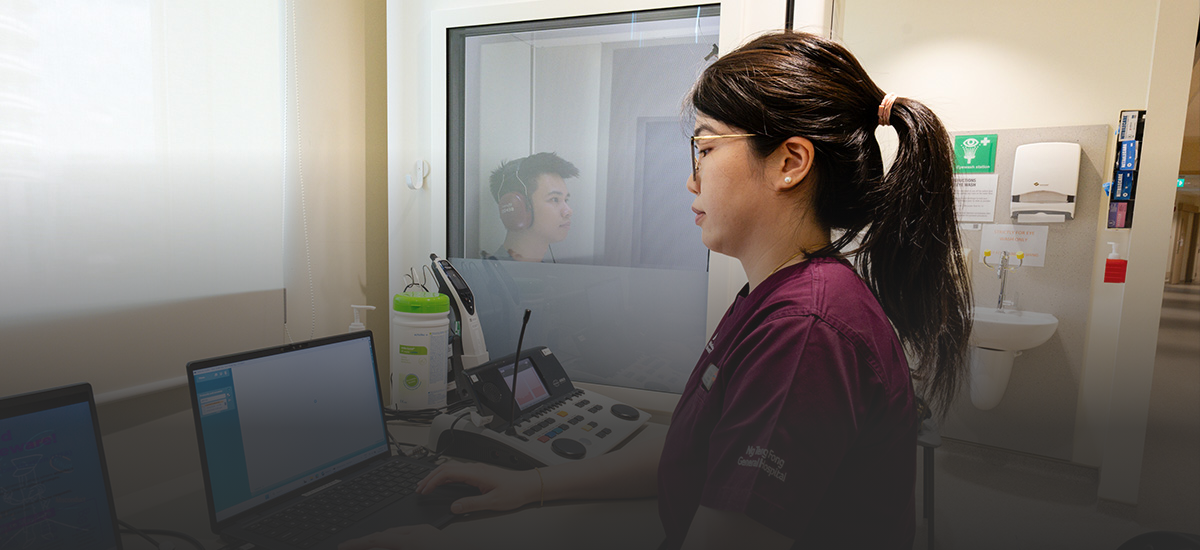
In April, NTFGH added three portable automated test booths at its Otolaryngology Clinic. During an automated test, patients follow recorded instructions and respond independently, without a clinician administering the test in person.
As the system allows simultaneous testing, one operator can supervise up to three patients at a time. While one patient completes the test, the next booth is prepared.
"What used to take more than an hour can now be completed in under 40 minutes," said Mr New, adding that the average test duration had fallen to about 12 minutes per patient.
"Before the automated booths were introduced, we spent the entire session administering the hearing test and monitoring the patient's responses," said Ms Lee Si Ting, Senior Audiologist at NTFGH.
"With automated audiometry, we can focus more on ensuring the results are accurate and reliable, while also completing other clinical tasks during the testing process. This allows us to use our time more efficiently without compromising patient care."
|
Who the booths are for
Eligibility criteria are reviewed on an ongoing basis as more data is collected. |
Improving access and efficiency
Following the introduction of the automated service, wait times for hearing tests fell from 42 to 18 days, a reduction of about 57 per cent.
The increased capacity has also made more-frequent testing possible. For patients managing ongoing hearing loss, regular testing allows hearing aid settings to be adjusted more precisely to patients' needs, improving rehabilitation outcomes.
"Patients who seek help earlier often have better outcomes because their hearing loss is identified at a milder stage," Ms Lee said. "Early assessment allows patients and their families to learn about treatment and rehabilitation options sooner, helping them adapt more effectively and reducing the impact of hearing loss on daily communication."
Changing the role of audiologists
With routine testing managed through automated booths and support staff, audiologists are now able to spend more time on detailed assessments, personalised hearing aid fitting and rehabilitation planning.
"There is more time for audiologists to focus on rehabilitation with hearing aids and to plan for increasing demand from a population perspective," Mr New said.
Preparing for future demand
As Singapore's population continues to age, demand for hearing care is expected to rise further.
The automated service addresses current capacity constraints while building the resources the department needs for long-term demand.
"Moving audiology further upstream in hearing care ensures we have the time and capacity to focus on more pressing needs," Mr New said.

|
In consultation with Mr Remy New, Head, Audiology Department, NTFGH and Ms Lee Si Ting, Senior Audiologist, NTFGH.
Related Articles
-(400-x-300-px).png?sfvrsn=19371fe8_1)