How CalSense+ is enabling earlier, smarter clinical care
Published on 18 March 2026
An AI-enabled system developed by NUHS is helping clinicians identify abnormal blood test results earlier, enabling faster intervention and more coordinated care for patients.
At a glance
- CalSense+ helps clinicians identify and act on abnormal blood test results earlier, supporting timely clinical intervention.
- By surfacing higher-risk results promptly, it enables better prioritisation of care and helps prevent complications.
- CalSense+ keeps human judgement at the centre while advancing precision care at scale.
An abnormal blood test result can often be the first sign of a serious underlying condition that requires timely medical attention.
One such condition is hypercalcemia, which occurs when calcium levels in the blood are abnormally high. If left untreated, it can lead to serious complications, including kidney failure and heart problems.
Enter CalSense+ – the next evolution of an artificial intelligence (AI) tool developed by the National University Health System (NUHS) to flag abnormal calcium levels in blood test results.
But this time, the ambition is bigger: to move beyond just detection, and into real-world clinical action earlier.
For Adj A/Prof James Lee Wai Kit, Head, Endocrine & Thyroid Surgery at Alexandra Hospital (AH), and Deputy Group Chief Technology Officer, NUHS, the shift was essential.
“Identifying cases on a dashboard alone wasn’t enough to change practice,” he explained. “We needed to embed the tool into clinical workflows, and make digital the default, not an add-on.”
From alerts on a screen to action on the ground
With CalSense+, concerning findings are actively flagged and brought forward. This helps care teams identify higher-risk patients earlier and intervene before problems escalate.
“CalSense+ systematically surfaces clinically relevant abnormalities and supports clinicians in identifying patients who may benefit from earlier review or intervention,” said Adj A/Prof Lee.
Crucially, it works alongside existing workflows, helping clinicians spot abnormal results more reliably without adding extra steps to their day-to-day work.
A practice-changing shift
Since its introduction, CalSense+ has contributed to more consistent identification of high-risk calcium abnormalities, faster review times, and greater overall awareness among clinicians.
Clinicians, Adj A/Prof Lee noted, are now able to act with greater confidence the moment a notification appears.
“We have seen positive responses from the clinicians because we have picked up cases where early intervention was beneficial,” said Adj A/Prof Lee.
Since the start of the project in 2024, NUHS has achieved a detection rate of up to 80 per cent across all hypercalcemia cases, and a 50 per cent reduction in time between an alert of an abnormal calcium result to a clinic visit for follow up.
Built with clinicians, not just for them
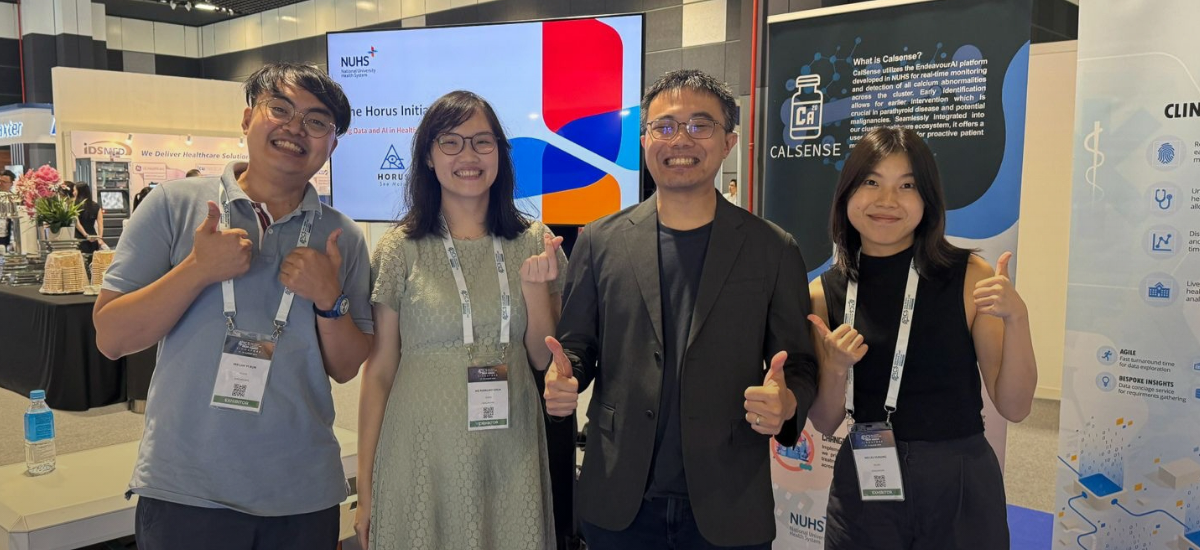
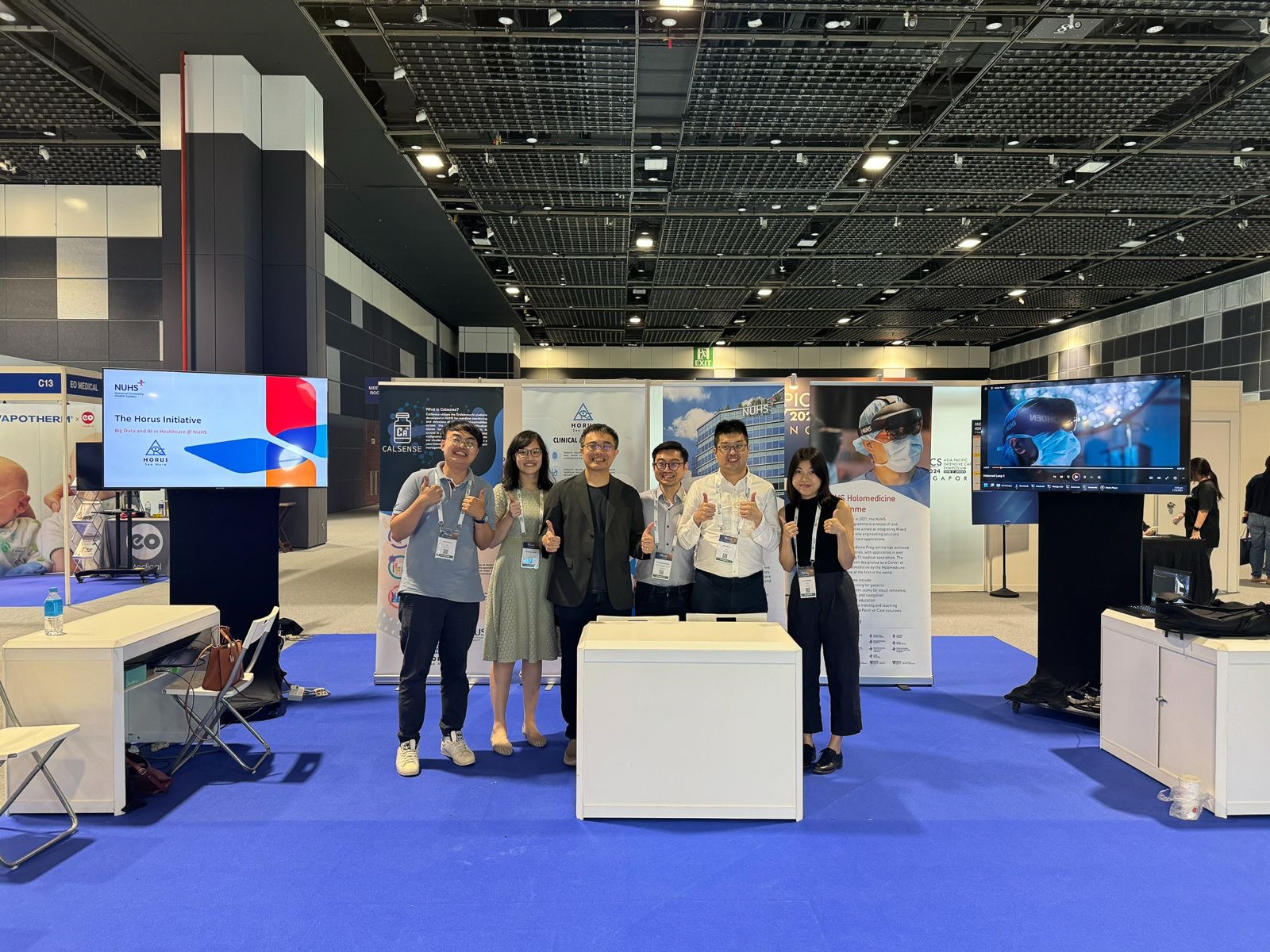
CalSense+ is supported by The Horus Initiative, a multidisciplinary team of data and AI experts, and runs on the Endeavour AI, which enables real-time analytics across institutions.
The project is led clinically by Adj A/Prof Lee and developed in close partnership with the Group Chief Technology Office and NUHS’ Practice-Changing Innovations team. Deployment of CalSense+ involved collaboration with Endocrinology Medicine and Endocrine Surgery teams across National University Hospital (NUH), AH and Ng Teng Fong General Hospital (NTFGH), as well as primary care partners from National University Polyclinics (NUP).
“That collaboration ensured this wasn’t just a ‘tech piece’,” Adj A/Prof Lee said. “Clinicians’ input shaped the final product so that what we built was feasible, meaningful, and adoptable in real clinical settings.”
CalSense+ was also designed with safeguards that keep human judgement firmly at the centre.
Adj A/Prof Lee was keen to emphasise that while the AI detects and issues alerts, clinical decisions remain in the hands of trained healthcare professionals.
“Human judgement remains central,” he said. “CalSense+ supports clinicians, but it does not replace clinical decision-making.”
Looking ahead: precision at scale
CalSense+ has already been deployed at NUH and AH, with plans to expand to NTFGH and potentially beyond NUHS in the future.
More broadly, Adj A/Prof Lee sees CalSense+ as a blueprint for how AI can support predictive, preventive and precision care.
Perhaps its most important lesson, however, is cultural rather than technical.
“If we want AI to be embedded into everyday clinical practice, stakeholders must be onboard,” Adj A/Prof Lee reflected. “Buy-in matters. When clinicians help shape the tools they use, that’s when technology truly becomes practice changing.”
In consultation with Adj A/Prof James Lee Wai Kit, Head and Consultant, Endocrine & Thyroid Surgery, AH, Deputy Group Chief Technology Officer, NUHS.
Related Articles