It takes a village: Bringing care closer to home in Queenstown
Published on 16 July 2026
At a glance
- Many of the challenges older residents face are not just medical — they may also grapple with social isolation and other daily struggles.
- While various healthcare and community partners play an important role in supporting older adults, navigating these different services can be challenging.
- The Blended Care Team’s work was recently recognised internationally at the International Conference on Integrated Care 2026 in the UK, highlighting how well-coordinated care can support residents more effectively.
As Singapore’s population ages, staying healthy often becomes more than managing medical conditions.
An older person living with diabetes may also be coping with loneliness after losing a spouse. Others may gradually become less mobile or socially isolated, even while living just a few doors away from neighbours. Challenges like these are becoming increasingly common, and supporting residents well requires healthcare, social service agencies and primary care partners to work closely together.
In Queenstown, the Blended Care Team under Health District @ Queenstown is doing exactly that.
The community-embedded team brings together community nurses, community health coaches, allied health professionals, social service agencies, grassroots organisations and volunteers to help residents stay healthy, connected and independent within their own neighbourhoods.
For Ms Teresa Quek, Assistant Director, Community Operations, at the National University Health System (NUHS), the work begins long before residents are enrolled in a programme.
Her role brings partners together to design the delivery of support within the neighbourhood. This includes developing care models, strengthening partnerships, identifying gaps in support, and creating opportunities for residents to access care closer to home. The goal is to make healthcare and social support work as a more-connected system around residents.
“Many of the challenges residents face are not purely medical,” Ms Quek said. “Someone may have a chronic condition, but they may also be isolated, lack confidence to leave home, or have limited support around them. That is why healthcare cannot work alone. We need healthcare, social care and the community to come together around residents.”
Bringing partnerships together
Residents often receive support from hospitals, primary care providers, social service agencies and community organisations. While each plays an important role, navigating these different services can be challenging, especially for older adults living with multiple health and social needs.
The Blended Care Team brings these partners together around the resident. Community nurses, community health coaches, and allied health professionals work alongside organisations such as the Agency for Integrated Care, Lions Befrienders and grassroots partners to provide proactive outreach, frailty screening, health coaching and coordinated follow-up.
Behind the scenes, different organisations regularly come together to discuss residents’ needs, coordinate care plans and identify concerns early before they become more serious.
“Every partner brings different strengths and perspectives,” Ms Quek said. “Healthcare teams may focus on medical risks, while community partners may understand residents’ daily struggles and social needs much more closely. The real work is connecting everyone around a shared purpose and building trust over time.”
Delivering integrated care requires both system-level coordination and a close understanding of residents’ everyday realities. Ms Quek and her team from Community Operations focus on building partnerships, programmes and systems that connect healthcare, social care and community support for residents.
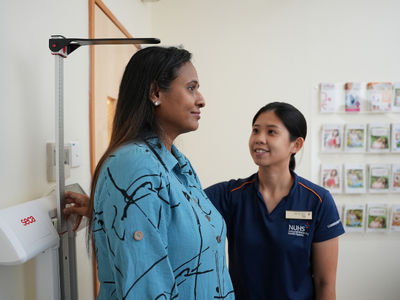
Community nursing and the wider care team help shape these approaches through their direct work with residents, including coordinating care, identifying emerging needs, and supporting residents in their day-to-day health journeys.
Together, these perspectives help ensure that care models are not only well-designed, but also practical, responsive and grounded in residents’ real experiences.
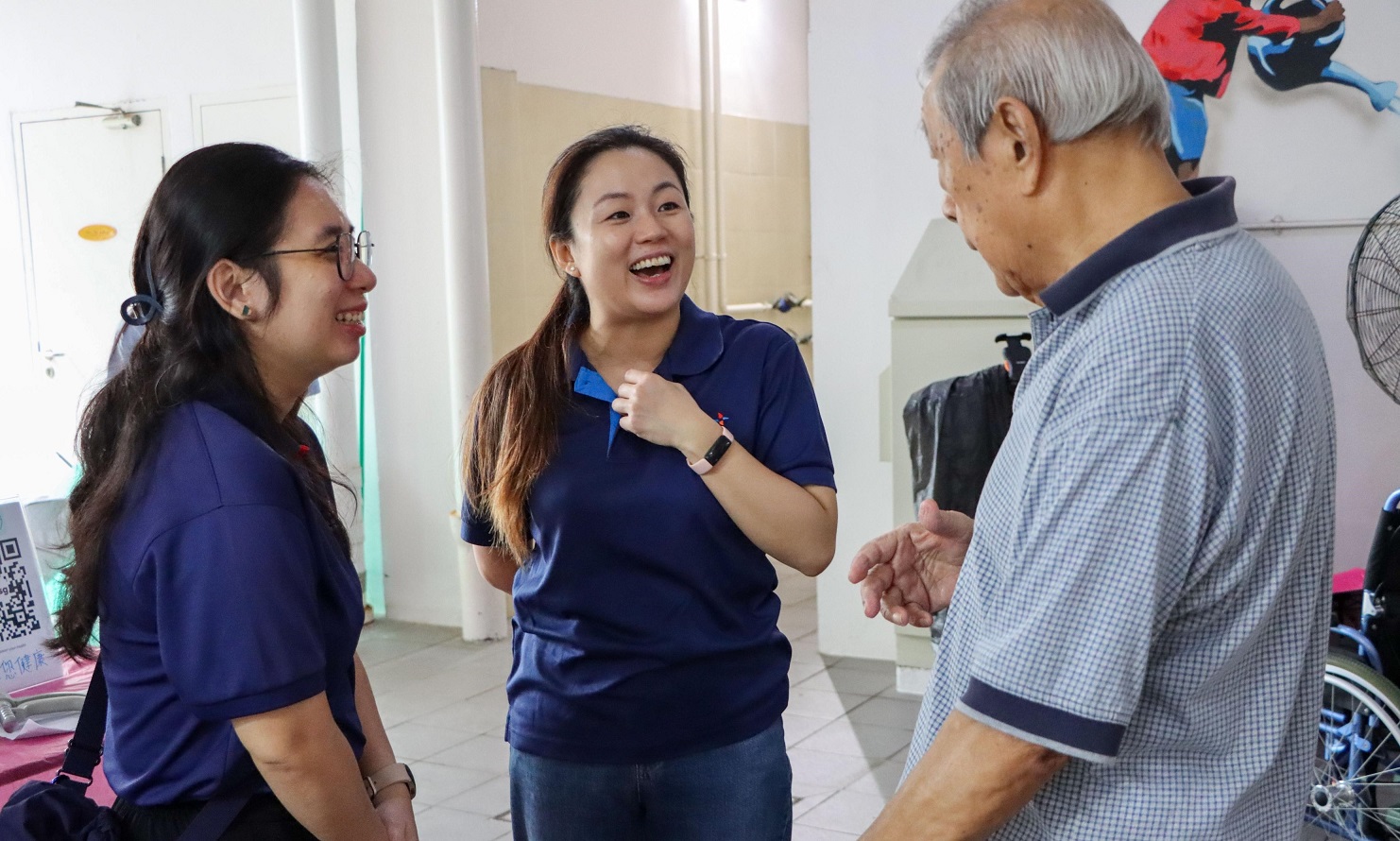
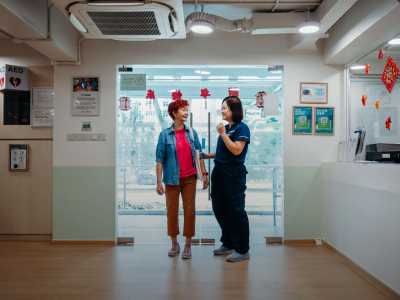
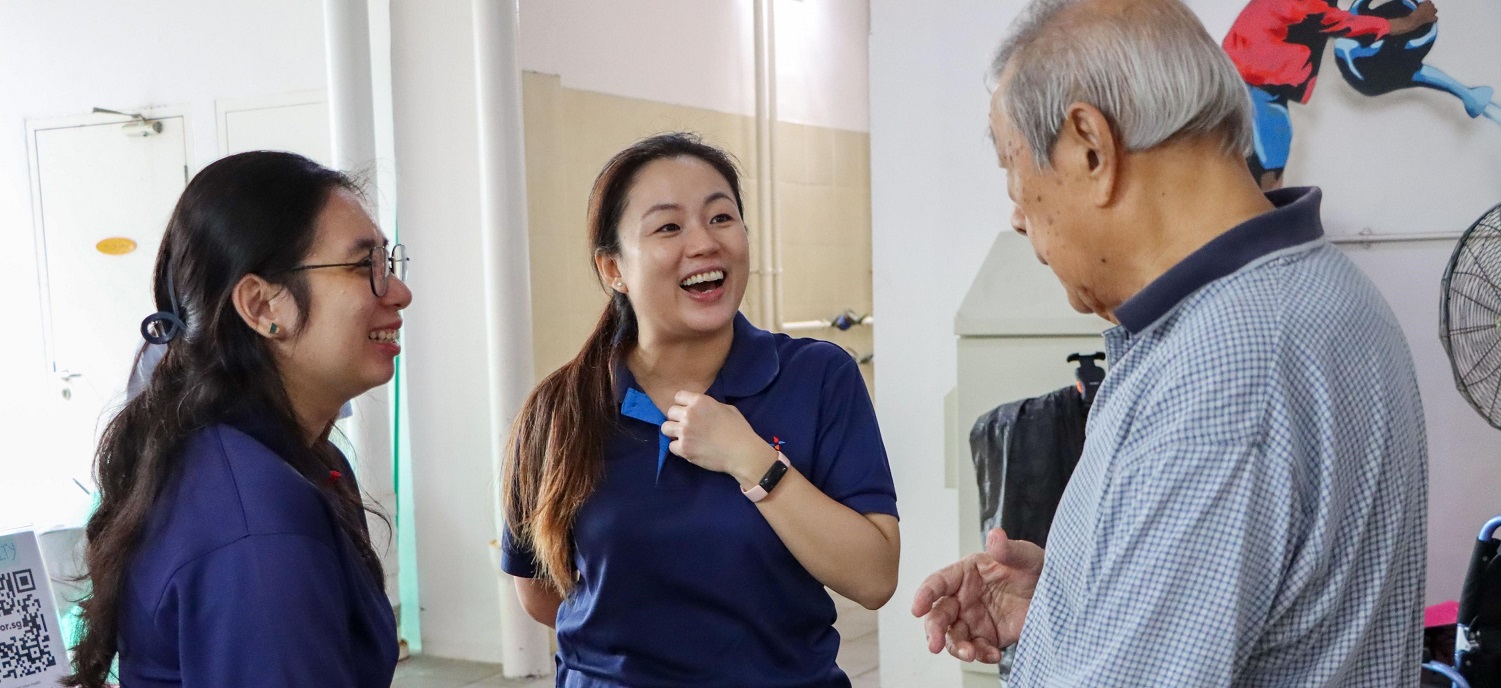
Ms Quek (middle) and her team speaking with a resident at Happy Village @ Mei Ling. Conversations like these help the Blended Care Team better understand residents’ needs and connect them with the right support in the community.
Care that comes together around residents
For Community Health Coach Ms Sally Lim, these partnerships become real when she meets residents in their neighbourhoods.
“Every resident’s situation is different,” she said. “Many of the residents we meet don’t just have one issue. Someone may have a chronic condition, be at risk of frailty, and feel a little lonely. Understanding the whole picture helps us connect them to the right support or partners.”
One resident she remembers is Mdm Frances Mak, 76, who lived alone after recovering from cancer. Although her treatment had ended, she was struggling with social isolation and rebuilding the confidence to manage her health independently.
Working closely with the wider Blended Care Team, Ms Lim coordinated support that included home monitoring, regular follow-ups and participation in a community frailty programme focused on exercise and nutrition. Over time, Mdm Mak regained her confidence, became more socially active and today volunteers to encourage other residents.
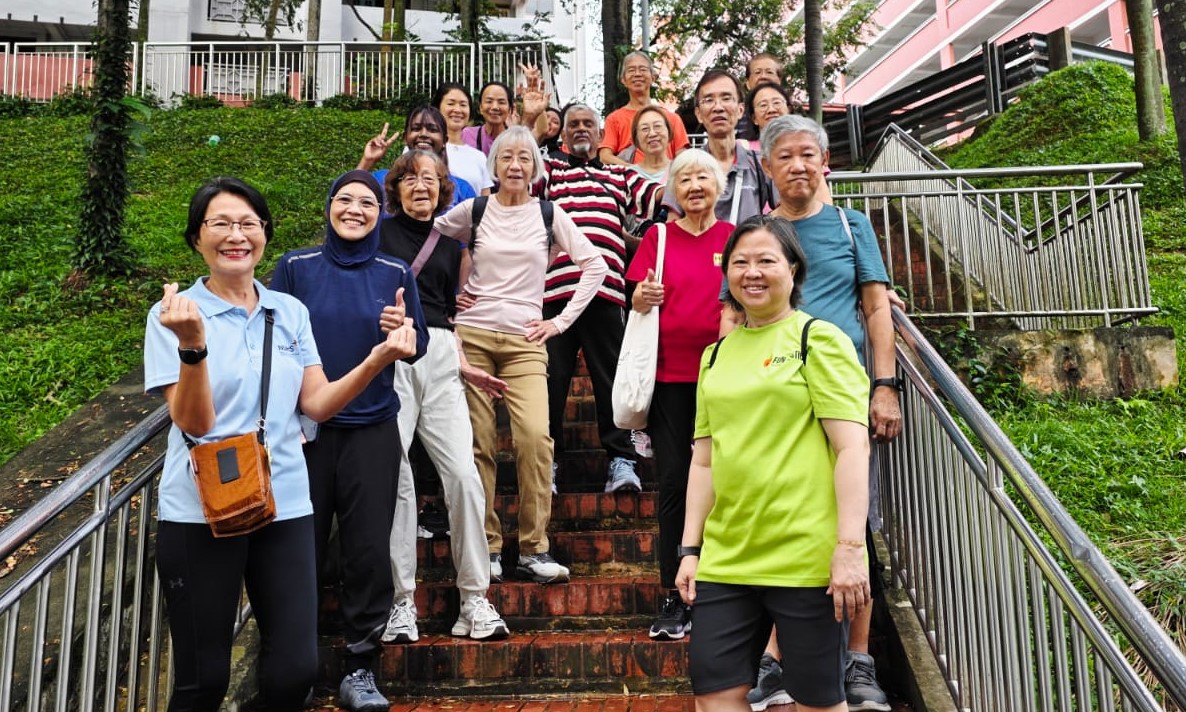
Residents at Happy Village @ Mei Ling participating in regular community activities. Mdm Mak (in pink) now volunteers alongside fellow residents and encourages others to stay active.
For Ms Quek, stories like these reinforce why partnerships matter.
“Health outcomes are often influenced by factors far beyond healthcare alone,” she said. “When residents become more connected to their community, gain more confidence in managing their health, and know where to seek support when they need it, that’s when we start seeing lasting change.”
The team continues to work closely with community partners to identify residents who may otherwise fall through the cracks, engaging them through neighbourhood activities, walking groups and regular check-ins. Increasingly, residents themselves become part of the support network, encouraging peers and helping to build stronger, healthier communities.
Building healthier communities together
The Blended Care Team’s work was recently recognised internationally at the International Conference on Integrated Care 2026 in the UK, highlighting how healthcare, social care and community partners can work together to support residents more effectively.
For Ms Quek, the recognition reflects what can be achieved when organisations work together around a shared purpose.
“One thing we’ve learnt is that residents’ lives don’t fit neatly into healthcare or social care alone,” she said. “A resident may need support managing a chronic condition, confidence to leave home, encouragement to stay active, or simply someone who knows them well enough to notice when something isn’t right. When we come together, we’re able to understand residents more holistically and support them in ways that none of us could achieve alone.”
As Singapore’s population ages, approaches like these will become increasingly important. At its heart, the Blended Care Team is guided by a simple idea: helping residents stay healthy, connected and independent for as long as possible, within the communities they call home.
In consultation with Ms Teresa Quek, Assistant Director, Community Operations, National University Health System (NUHS), and Ms Sally Lim, Community Health Coach, Regional Health System Office (RHSO).
Related Articles