Navigating PCOS: How to manage your symptoms
Published on 18 November 2024
Your guide to managing polycystic ovary syndrome and its challenges, from menstrual health to fertility issues.
Polycystic ovary syndrome (PCOS) is a hormonal disorder that affects anywhere between six to 21 per cent of women aged 18 to 45 across the world, if not more. Because of its complexities, symptoms of the condition can differ from person to person. It can even go unnoticed due to the mix of signs and symptoms, rather than one clear cause.
Common symptoms include irregular or infrequent menstrual cycles, increased hair growth due to higher levels of male hormones, and insulin resistance. Some women with PCOS may also find it difficult to conceive.
Dealing with fertility challenges
While some women with PCOS conceive without medical intervention, infertility due to irregular ovulation is common. The condition can affect fertility in several ways, such as causing irregular or absent ovulation, and insulin resistance. These issues can make it harder for women with PCOS to get pregnant compared to those without the condition.
Dr Yuan Xi, Resident with the Department of Obstetrics & Gynaecology, National University Hospital (NUH), advised seeking medical attention if a couple has been actively trying to conceive for a year without success if they are under 35. For those over 35, they should seek attention after six months of trying.
She added that the right care – like lifestyle changes – and treatment can help many women with PCOS conceive, sometimes even without medical help, and have healthy pregnancies.
Other causes for concern
Aside from fertility issues, PCOS can significantly impact the menstrual cycle. The condition can lead to irregular periods, with some women having infrequent, heavy or missing periods. Others may experience prolonged periods or closely spaced cycles or have light bloody discharge or spotting on and off. These irregularities happen because women with PCOS tend to have unusually high levels of hormones called androgens, which, in turn, affect ovulation and the menstrual cycle.
According to Dr Yuan, infrequent periods are a significant concern. If you go more than three months without menstruating (and you are not pregnant), you should see a doctor.
This is because the uterine lining, or endometrium, can continue to thicken if it is not shed regularly during your period. Repeated missed periods increase the risk of the lining thickening, which can lead to precancerous or cancerous changes in the womb.
5 myths about PCOS you should stop believing
Understanding the condition can be challenging, especially with so many misconceptions surrounding it. Here are five common myths, along with the facts that debunk them.
Myth #1: PCOS only affects fertility.
Fact: The condition has an impact of different aspects of health, such as metabolism, mood and heart health. It can also lead to insulin resistance, weight gain and an increased risk of diabetes and heart disease.
Myth #2: You can’t get pregnant if you have PCOS.
Fact: While it can complicate conception, many women with the condition do manage to get pregnant, sometimes with the help of lifestyle changes or fertility treatments.
Myth #3: You must have ovarian cysts to be diagnosed with PCOS.
Fact: Not all women with the condition have ovarian cysts. Diagnosis is based on several symptoms, including an irregular menstrual cycle, and raised levels of androgens.
Myth #4: PCOS is caused by poor lifestyle choices.
Fact: The exact cause is not known, but it is linked to genetic and environmental factors. Lifestyle changes can help manage symptoms, but they are not the root cause.
Myth #5: Losing weight cures PCOS.
Fact: While weight loss can improve symptoms, it can also help some women achieve more regular menstrual cycles. However, PCOS is a chronic condition that cannot be cured. Treatment focuses on managing the symptoms over the long term.
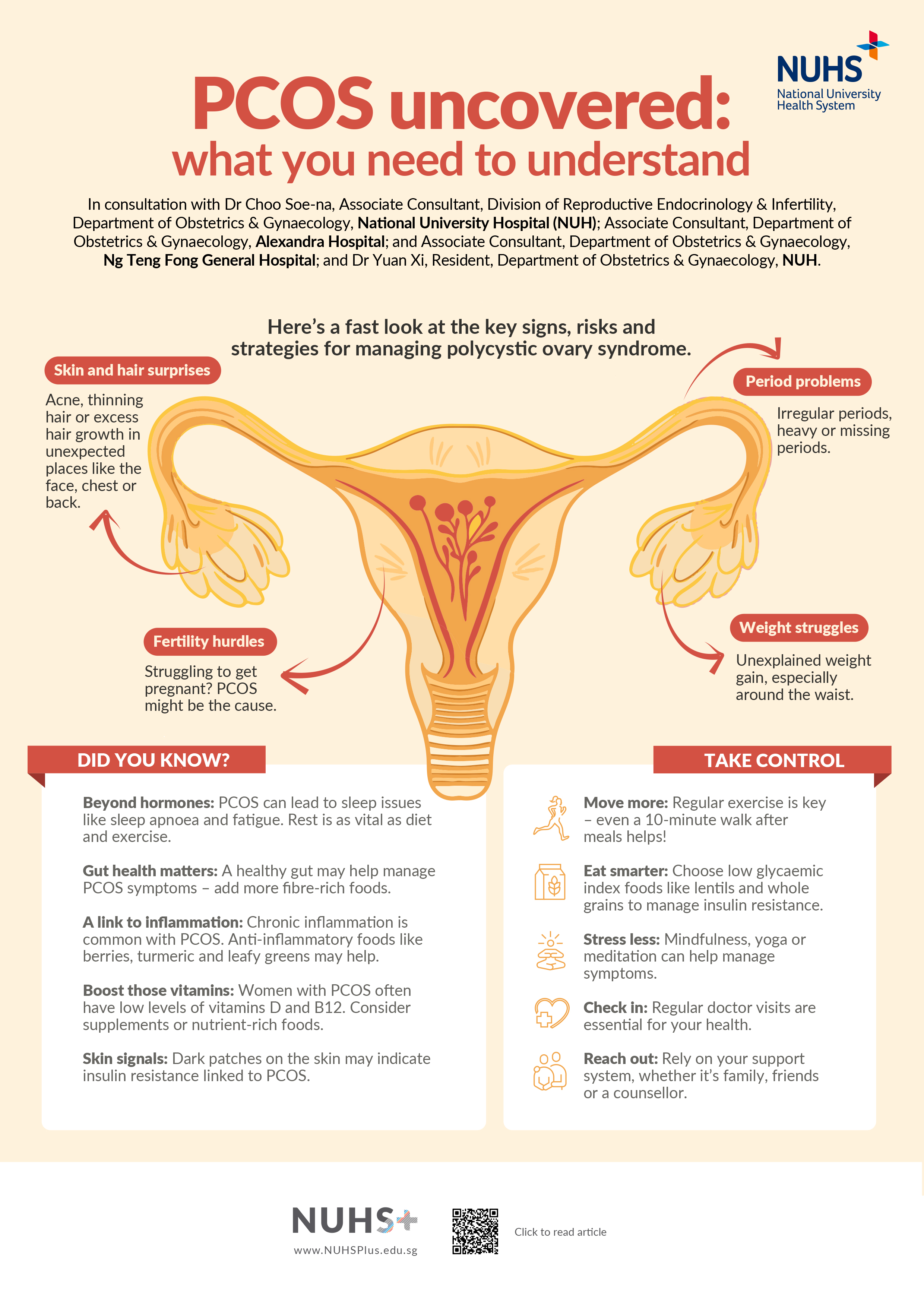
In consultation with Dr Choo Soe-na, Associate Consultant, Division of Reproductive Endocrinology & Infertility, Department of Obstetrics & Gynaecology, NUH; Associate Consultant, Department of Obstetrics & Gynaecology, Alexandra Hospital; and Associate Consultant, Department of Obstetrics & Gynaecology, Ng Teng Fong General Hospital; and Dr Yuan Xi, Resident, Department of Obstetrics & Gynaecology, NUH.
Related Articles