The growing role of blood tests in cancer detection
Published on 22 June 2026
New blood-based screening tests are making cancer detection more accessible than ever. But can a simple blood test really find cancer, and how does it fit alongside traditional screening methods?
At a glance
- Early detection can significantly improve the chances of successful treatment and cure for many cancers.
- Blood-based tests such as GastroClear offer a more convenient and less-invasive screening option.
- While promising, blood tests cannot diagnose cancer on their own and must be followed by confirmatory tests.
For many people, the thought of cancer screening can be daunting.
Some worry about uncomfortable procedures. Others fear what the results might reveal. As a result, many put off screening until symptoms appear, which means they often miss the opportunity to detect cancer at its earliest and most treatable stage.
Today, however, advances in medical research are opening up new possibilities. Blood-based screening tests are emerging as a less-invasive way to identify people who may be at risk of certain cancers, potentially making screening more accessible to those who might otherwise avoid it.
But how do these tests work, and can they replace traditional screening methods?
According to Prof Jimmy So, Head and Senior Consultant, Division of Surgical Oncology at the National University Cancer Institute, Singapore (NCIS), and Head and Senior Consultant, Division of General Surgery (Upper Gastrointestinal Surgery) at the National University Hospital (NUH), blood tests represent an exciting development in cancer detection, but they are only one piece of the puzzle.
Why screening still matters
Many cancers develop with no obvious symptoms during the early stages.
By the time symptoms appear, the disease may already be more advanced and harder to treat. This is why regular screening remains one of the most effective ways to improve outcomes.
"Health screening is very important because many diseases, including cancer, have no symptoms in the early stages," said Prof So.
However, different cancers require different screening approaches. Established methods that have been proven to detect cancer early include mammograms for breast cancer, pap smears for cervical cancer, stool tests for colorectal cancer, and low-dose CT scans for lung cancer in high-risk individuals.
The type of screening a person requires depends on factors such as age, family history and lifestyle.
For example, low-dose CT scans are generally recommended only for people at higher risk of lung cancer, such as long-term heavy smokers, rather than the general population.
Prof So also cautioned that the tumour marker tests offered in many health screening packages are “not accurate” for early cancer detection.
Instead, these markers are often used to monitor a patient's response to treatment or assess disease progression only after a cancer diagnosis has already been made.
How blood tests are changing cancer detection
One promising area of research in early cancer detection involves microRNA (micro ribonucleic acid), which are small genetic molecules found in the bloodstream that can reflect changes occurring within cells.
By analysing a panel of these biomarkers, scientists can identify patterns that may be associated with the presence of cancer.
This research has led to the development of blood-based screening tests such as GastroClear, which is designed to identify individuals who may have gastric (stomach) cancer, and is available within the National University Health System (NUHS) cluster.
A key advantage of GastroClear convenience.
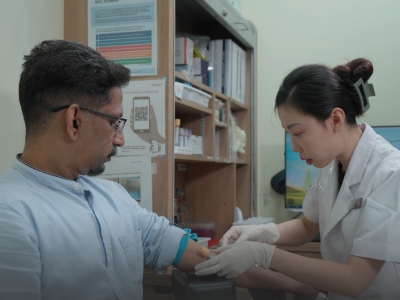
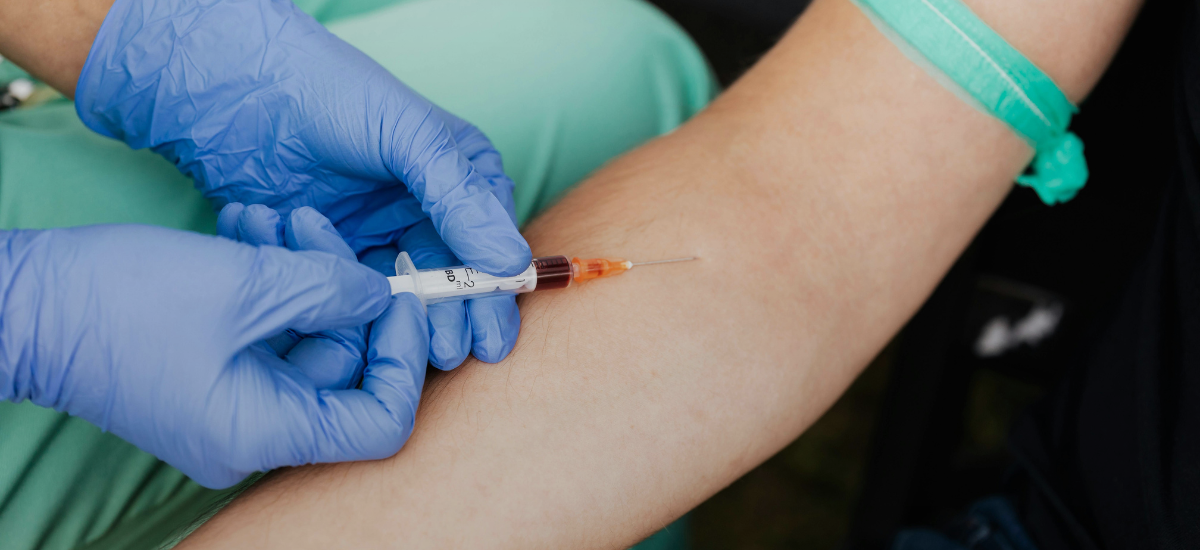
Unlike procedures such as endoscopy, which involves inserting a flexible camera into the digestive tract, or CT scans, which require specialised equipment, a blood test can be performed in a community setting such as a GP clinic or polyclinic.
This may encourage more people to participate in screening, particularly those who are reluctant to undergo more-invasive procedures.
The question then arises: Can a blood test diagnose cancer?
Not quite.
While the results from blood-based screening tests have shown promise, they are not considered definitive diagnostic tools just yet.
"A positive result does not mean someone definitely has cancer," said Prof So. "Further investigations are still needed to confirm the diagnosis."
For example, someone with a positive GastroClear result would typically be referred for an endoscopy and biopsy to determine whether cancer is actually present, as traditional investigations remain the gold standard for diagnosis.
Instead, blood tests serve as an additional screening option that can help identify individuals who may benefit from further assessment.
Why family history matters
Although cancer is more commonly associated with older adults, doctors are seeing increasing attention paid to cancers diagnosed in younger individuals.
While still relatively uncommon, these cases can sometimes be linked to inherited risk factors.
Therefore, people with a strong family history of cancer may require earlier or more-targeted screening than the general population.
"If cancers occur at a younger age within a family, it may suggest a hereditary cancer risk," said Prof So.
Beyond family history, lifestyle factors remain important. Avoiding smoking, limiting alcohol consumption, maintaining a healthy weight and staying physically active can all help reduce cancer risk.
When early detection changes everything
The impact of early detection can be lifesaving.
"When cancer is detected at Stage 1, the chance of cure can be as high as 80 to 90 per cent or even higher," said Prof So. "At Stage 4, outcomes are significantly worse."
Early-stage cancers are also often easier to treat and may require less-extensive surgery or treatment. This is especially so with significant advances in cancer treatment over the past few decades.
Alongside traditional chemotherapy, patients today may benefit from targeted therapies and immunotherapy, which have improved survival rates for many cancers.
Prof So recalls one patient in her 50s who underwent a GastroClear test as part of a routine health check despite having no symptoms. The test result was positive, prompting further investigation. An endoscopy subsequently detected early-stage stomach cancer.
"It highlights the fact that cancer can be completely silent in its early stages," said Prof So.
Thankfully, as the cancer was found early, the patient was able to undergo timely surgery and has since been cured.
As blood-based screening technologies continue to evolve, they could make cancer screening more convenient and accessible to larger segments of the population.
For now, however, Prof So's message remains simple: do not wait for symptoms to appear.
"Please go for regular screenings," he said. "Early detection significantly improves outcomes."
In consultation with Prof Jimmy So, Head and Senior Consultant, Division of Surgical Oncology, NCIS, and Head and Senior Consultant, Division of General Surgery (Upper Gastrointestinal Surgery), NUH.
Related Articles