The sweet spot: Manage gestational diabetes for a healthy pregnancy
Published on 19 December 2024
A diagnosis may feel daunting, but with a balanced diet, exercise and the right support, you can protect both you and your baby.
If you are experiencing fatigue, frequent urination or thirst during pregnancy, you could have gestational diabetes mellitus (GDM).
While GDM affects about one in five pregnant women in Singapore, many are unaware that they have the condition, as symptoms are often absent or mistaken for typical pregnancy discomforts.
“Often, there are no specific symptoms that indicate GDM. This is why we routinely screen with an oral glucose test in the second trimester between 24 and 28 weeks,” said Dr Pradip Dashraath, Consultant, Division of Maternal Fetal Medicine, Department of Obstetrics & Gynaecology, National University Hospital (NUH).
Understanding GDM and who’s at risk
GDM develops when your body struggles to produce enough insulin to regulate blood sugar levels. During pregnancy, increased hormones such as cortisol and placental factors help your baby grow. However, these hormones can cause your body to become resistant to the effects of insulin.
“So, although your blood glucose levels could have been normal when you were not pregnant, GDM can still occur during pregnancy,” explained Dr Dashraath.
He added that the likelihood of developing GDM increases if you are over 40, have a high body mass index (BMI) above 23, previously had GDM or a baby over 4kg, have close family members with diabetes, or are of Chinese, South Asian Indian or Middle Eastern heritage. GDM can also happen at any stage of pregnancy, but is more common in the second or third trimester.
While GDM is usually temporary, it needs careful control to avoid complications like premature birth, large birth weight, low newborn blood sugar, pre-eclampsia – a serious pregnancy complication that causes high blood pressure, protein in urine and organ damage – or, in the worst case, stillbirth.
Early detection
Testing for GDM is a standard part of pre-natal care.
“If you have had GDM in a previous pregnancy, we will offer you an oral glucose test in the first trimester of your next pregnancy, because there is a 50 per cent chance you may develop GDM again,” said Dr Dashraath.
“Sometimes, we detect glucose in your urine, or we observe your baby to be growing much larger than usual. In these situations, we will also discuss checking you for GDM.”
GDM is detected using an oral glucose tolerance test (OGTT). The OGTT requires fasting for at least eight to 12 hours prior to the test, though you may drink water during this period. This is followed by blood tests before and after consuming a glucose drink. The test is done in the morning and usually lasts for two hours. GDM is diagnosed when blood sugar levels are higher than normal before or after the glucose drink.
Despite its importance, some women try to avoid the test, or alter their test results. This can be due to several reasons, including the fear of diagnosis, a misunderstanding of the significance of the test, or an unwillingness to follow instructions.
“Cheating behaviours include not fasting properly, adjusting the glucose intake, or misreporting prior food intake, but these actions can put mother and baby at serious risk,” cautioned Dr Dashraath.
“While age, family history, ethnicity and lifestyle choices may increase the risks, GDM can affect any woman. Getting tested remains essential for a healthy pregnancy.”
Balance is key
Diet and portion control is a critical part of controlling GDM. A practical approach is following the “My Healthy Plate” concept.
“Half of the plate should be filled with non-starchy vegetables, one quarter with lean protein and the remaining quarter with carbohydrates,” advised NUH’s Senior Dietitian Valerie Teong.
Non-starchy vegetables, such as spinach, broccoli and carrots, can help stabilise blood sugar and keep you feeling full longer. Lean proteins, like chicken breast, tofu and fish, are essential for your baby’s growth.
Carbohydrates should be carefully chosen – wholegrain options like multigrain bread and basmati rice offer a lower glycaemic index, providing a lower and slower rise in blood sugar.
Sweet snacks and drinks are best limited when managing GDM. “Watch out for added sugar in foods, such as cakes, chocolates and cookies, or in sweetened beverages like fruit juice or even coconut water. They have minimal nutritional value and can cause a rapid spike in your blood sugar,” warned Ms Teong.
“Water is the best way to stay hydrated. Otherwise, choose diet, zero sugar or unsweetened beverages in moderation. Choose snacks such as a handful of nuts, which contain healthy fats, to help meet your nutritional needs during pregnancy.”
Staying active is also key to keeping your blood sugar levels in check. Engage in moderate-intensity physical activity such as brisk walking or swimming. Seek your doctor’s advice before starting any exercise programme.
Monitoring long-term health
A common misconception is that GDM is a lifelong condition. However, the fact is that it typically resolves after delivery.
“Your glucose levels will be tested again six to 12 weeks after the birth, and in most women, these will be normal,” said Dr Dashraath.
However, it is crucial to continue making healthy lifestyle choices to reduce the risk of developing diabetes in the future.
“We have observed that up to 50 per cent of women who have had GDM in pregnancy develop type 2 diabetes within the following five years,” he said. “Therefore, I strongly advise that you continue to have your blood glucose checked every year during your annual health screen.”
He stressed: “It is important to maintain your healthy lifestyle changes – a balanced diet, regular exercise, watching your weight and routine checks – to support your long-term health.”
For more information on gestational diabetes, visit NUHS’ Guide to Diabetes.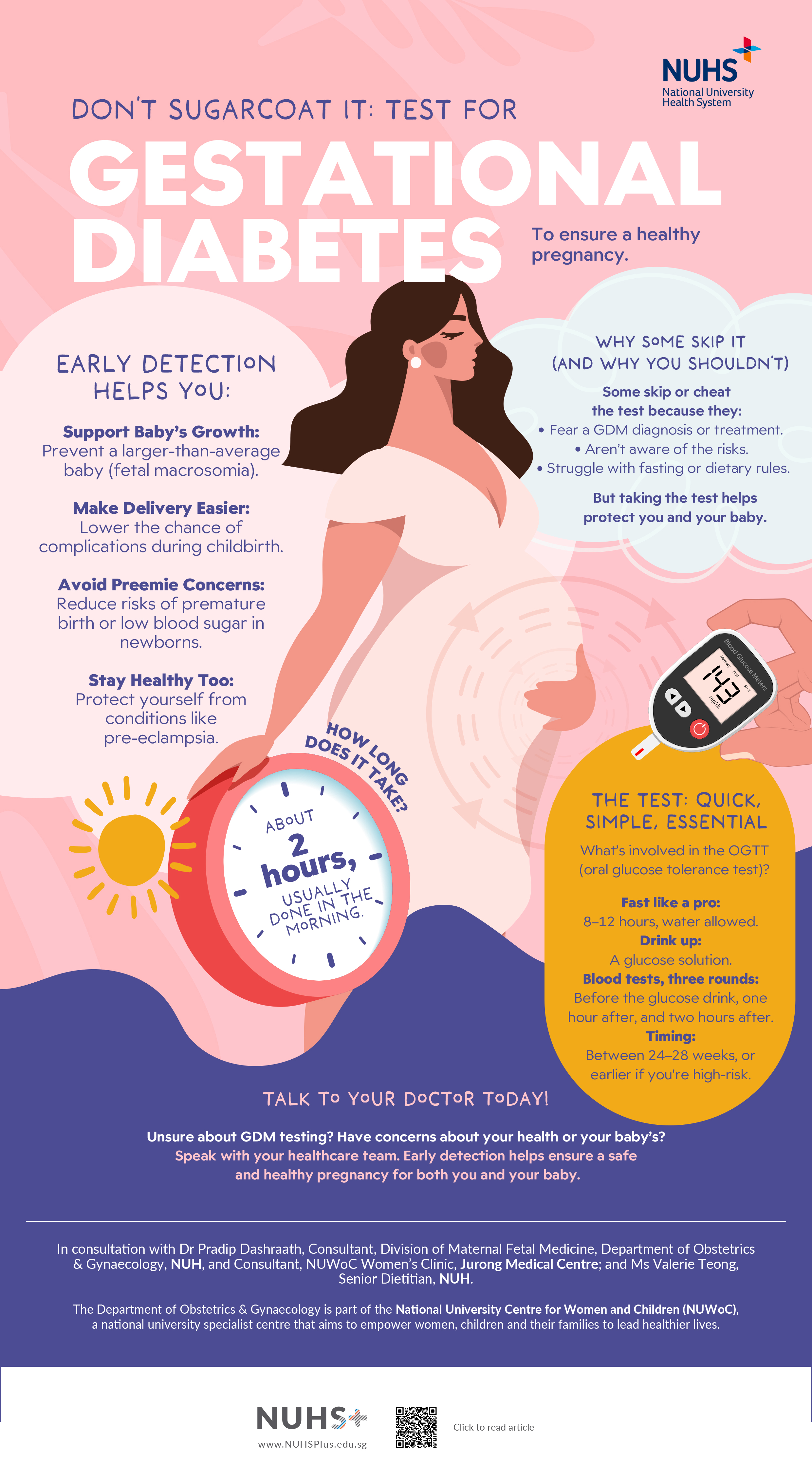
The Department of Obstetrics & Gynaecology is part of the National University Centre for Women and Children (NUWoC), a national university specialist centre that aims to empower women, children and their families to lead healthier lives.
In consultation with Dr Pradip Dashraath, Consultant, Division of Maternal Fetal Medicine, Department of Obstetrics & Gynaecology, NUH, and Consultant, NUWoC Women’s Clinic, Jurong Medical Centre; and Ms Valerie Teong, Senior Dietitian, NUH.
Related Articles