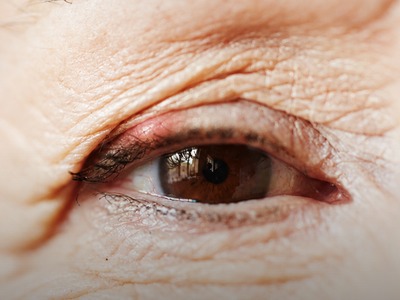
The warning signs of retinal detachment
Published on 18 March 2026
Floaters drifting across your vision are common, especially as we age. But when they appear suddenly or in large numbers, they could signal a sight-threatening condition that requires urgent care.
At a glance
- Retinal detachment occurs when the retina separates from the back of the eye and can lead to vision loss if untreated.
- Sudden floaters, flashes of light, or a dark shadow in vision may be warning signs of retinal detachment.
- Early treatment can greatly improve the chances of preserving vision.
Have you ever noticed small specks drifting across your field of vision and wondered what they are? You try to blink them away, but they remain. When you shift your gaze, the shapes seem to move with you.
These specks, known as “floaters”, are a common part of ageing. While they are usually harmless, a sudden increase in floaters, especially when they appear all at once, may signal a more serious problem – retinal detachment.
According to Dr George Thomas, Consultant, Department of Ophthalmology at National University Hospital (NUH) University Hospital (NUH), there are several factors that can increase a person’s risk of developing retinal detachment.
“In Singapore, major risk factors include high myopia, increasing age, eye trauma, previous eye surgery, a history of retinal detachment in the other eye, and a family history of retinal detachment,” he said.
When a tear forms in the retina
One of the most common causes of retinal detachment is a tear in the retina – a thin layer of tissue lining the back of the eye that detects light and sends signals to the brain, allowing us to see.
When a tear forms, fluid can pass through the opening and collect behind the retina, causing it to separate from the wall of the eye.
But what causes these tears?
In many cases, they are related to changes in the vitreous, a gel-like substance that fills the back of the eye and is attached to the retina.
“As we age, the vitreous naturally liquefies and may separate from the retina, a process known as ‘posterior vitreous detachment’,” said Dr Thomas.
It is during this process that people may notice floaters. In some cases, if the vitreous pulls too strongly on the retina, it can create a tear that may lead to retinal detachment.
Who is at risk, and why early checks matter
In Singapore, retinal detachment affects about 10 people per 100,000 each year.
According to studies, men have a slightly higher risk than women, while differences have also been observed across ethnic groups.
“Local research has shown differences in incidence among racial groups, with Chinese patients having a higher reported risk, followed by Malays and Indians,” Dr Thomas shared.
People with severe myopia are also at higher risk, as their retinas are often thinner and more prone to tearing.
However, while Singapore has one of the highest rates of myopia in the world, retinal detachment itself remains relatively uncommon.
Dr Thomas explained that this is partly because most people have low to moderate myopia, which carries a much lower risk than very high myopia.
In addition, easy access to high-quality eye care in Singapore means retinal tears can often be detected and treated early before they progress.
“This early intervention significantly reduces the number of retinal detachments that occur,” he said.
As such, Dr Thomas stressed the importance of seeking medical help as soon as symptoms of a retinal tear or retinal detachment appear.
Key warning signs include a sudden increase in floaters, flashes of light, or a shadow or curtain appearing in part of the vision.
“Retinal detachment is considered an eye emergency. If only a retinal tear is present, prompt laser treatment, ideally within one day, can prevent detachment,” Dr Thomas elaborated.
“If the retina has already detached, surgery is usually performed urgently, often within 24 to 72 hours. This is particularly important if the macula, which is responsible for central vision, is still intact, as early treatment improves the chances of preserving vision.”
Treating retinal detachment to preserve vision
To repair the retina, surgeons may perform a procedure known as a vitrectomy, where tiny instruments are inserted into the eye to remove the gel-like vitreous. This allows the surgeon to reposition the retina and seal the tear using laser treatment or freezing therapy.
Another option is scleral buckling, where a soft silicone band is placed around the outer wall of the eye. This gently pushes the wall of the eye inward, helping the retina settle back into its proper position.
For certain types of retinal detachment, doctors may perform a pneumatic retinopexy instead, in which a small gas bubble is injected into the eye. The bubble presses against the detached retina while laser treatment or freezing therapy seals the tear.
Ultimately, the most appropriate procedure depends on the location and severity of the detachment.
After surgery, patients may need to lie face down for several days, as Dr Thomas explained, “Gas or silicone oil is often used during surgery to support the retina from inside the eye. Because these materials float in the eye, which is mainly fluid filled, patients may need to maintain a face-down position for several days to ensure the bubble presses against and supports the correct part of the retina to keep it attached.”
While surgery is often successful, Dr Thomas warned that retinal detachment can sometimes recur due to new tears or scar tissue forming inside the eye.
In such cases, further surgery may be required to stabilise the retina.
"Recurrence may occur due to incomplete positioning after surgery, new retinal tears, persistent traction, or scar tissue formation inside the eye,” said Dr Thomas.
“When this happens, repeat surgery may be required. This may involve combining procedures such as vitrectomy and scleral buckling, and often the use of silicone oil for longer-term internal support.”
In consultation with Dr George Thomas, Consultant, Department of Ophthalmology, NUH.
Related Articles