At the crossroads of science and patient care
PUBLISHED ON
SCROLL DOWN
Research as the starting point
For Prof Chng Wee Joo, research is closely tied to the clinic, where discoveries can become new possibilities for his patients.
“All the improvement in treatment and outcomes throughout the history of cancer has been due to research and clinical trials.”
- Prof Chng Wee Joo
“When patients participate, they often receive better care because the protocol is geared for safety, and they may get access to new drugs when options are limited.”
- Prof Chng
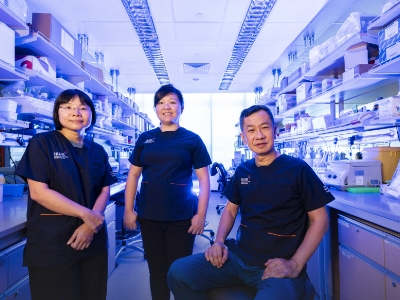
At the National University Health System (NUHS), where Prof Chng is Group Chief Scientist and Senior Consultant at the National University Cancer Institute, Singapore (NCIS), he leads agile, multidisciplinary teams that turn molecular findings into treatments patients can use.
His teams test research against reality. Scans and consultations show whether a lab insight can meaningfully change care decisions. Precision medicine, he explained, “means giving the right drugs to the right patient at the right doses to achieve the best response with minimal side effects”.
While this approach has succeeded in some cancers, many remain difficult to predict. “For many cancers, we’re still not quite there yet. There’s a long way to go and much more research to do,” he added.
Predicting tumour behaviour
At NUHS, researchers combine genetic, molecular and clinical data to build predictive models. This helps anticipate tumour behaviour with greater accuracy.
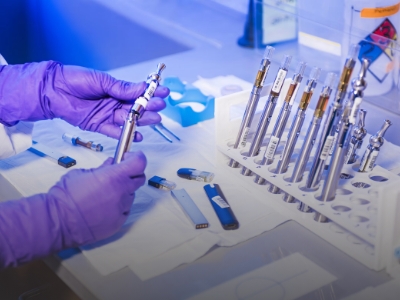
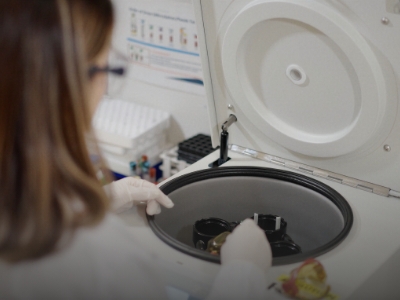
In the lab, Prof Chng tracks how cancer cells evolve and react to drugs. These observations guide the next clinical trials and help identify patients who may benefit most. Working within an academic health system ensures that scientific innovation contributes to real transformation in patient care.
How curiosity drives his work
Curiosity is what keeps him asking why cancers behave differently from one patient to another, and what might change that trajectory. It is also what pushes his research beyond NUHS, into regional collaborations that expand the evidence base and sharpen how treatments work for Asian patients.
One such platform is the Asian Myeloma Network, which he chairs. The network brings together data and expertise across the region, and recently published a study in the Blood Cancer Journal showing that an oral drug combination can extend survival for patients with relapsed myeloma while reducing the need for hospital visits.
Another recent paper from his group examined how cancer cells develop resistance to lenalidomide and identified new drug combinations that may help prevent relapse. Each discovery, he said, brings them closer to “options that prolong life with good quality and raise the possibility of a cure”.
“Seeing how our work can help improve patient outcome is deeply gratifying and reaffirms that what we do is important,” he said. “We still have many gaps in knowledge about cancer. But every new piece of science gives us tools to unlock its mysteries.”
One such lesson came from his study of a protein called EZH2. His team discovered that its role in cancer does not always depend on its enzymatic function, meaning enzyme-targeting drugs may not work in every case. The experience taught him that “as scientists, we have to be precise and accurate in our communication about our work and its implications”.
Nurturing the next generation
Prof Chng urges the next generation of clinician-scientists to learn widely across disciplines and apply ideas creatively to their own fields. "Learn and model from the best but also learn outside your field. See patterns and possibilities," he said.
Beyond work, he looks for ideas everywhere
As a scientist who continues to see patients, Prof Chng draws motivation from each improvement in outcomes and from Singapore's growing role in global cancer research.
“Be creative in applying knowledge from elsewhere. Think big and ambitious but stay practical and realistic.”
– Prof Chng
In consultation with Prof Chng Wee Joo, Group Chief Scientist,NUHS;
Senior Consultant, Division of Haematology, Department of Haematology-Oncology, NCIS; Professor, Department of Medicine, NUS Medicine; and Vice President (Biomedical Sciences Research), Office of the Deputy President (Research and Technology), NUS.