Keep getting styes? Could it be more than bad luck?
Published on 25 September 2026
Recurring styes may be linked to changes in the eyelids as you age. Learn what may be driving repeated flare-ups and how to manage them.
A sore, swollen eyelid can be uncomfortable, but it often seems like a minor problem that will settle on its own. However, if the same painful bump keeps reappearing, your eyelids may need closer attention.
A stye is a painful, acute infection that causes symptoms such as redness, swelling, pain, and tenderness. A stye can be internal or external, depending on the location of the gland involved.
While styes are often associated with children, adults commonly experience recurring styes as well. As you get older, changes to the oil glands and tear film can make styes more likely to return. Understanding how these changes affect eyelid health is an important step towards preventing repeated flare-ups.
Why do recurring styes become more common with age?
Tiny oil-producing glands inside the eyelids, known as the meibomian glands, help keep the eyes comfortable by preventing tears from drying out too quickly. As you age, the composition of the oil they produce changes, making the glands more prone to blockage and causing them to lose their function.
This condition is known as meibomian gland dysfunction (MGD). Ms Fifiana Tan, Senior Optometrist at Ng Teng Fong General Hospital (NTFGH), points to Tear Film & Ocular Surface Society Dry Eye Workshop II Epidemiology report, which stated that MGD becomes more common with age, increasing by about 5.3 percent per decade in individuals aged 40 and above.
The eyelid margins may also become inflamed, a condition called blepharitis. Common symptoms include redness, irritation, and crusting around the eyelashes. Over time, this inflammation can interfere with the normal function of the eyelid oil glands, making blockages and recurring styes more likely.
What else may be behind recurring styes?
Recurring styes can also be associated with dry eyes, diabetes, autoimmune conditions, ocular rosacea and Demodex. These conditions may increase inflammation, disrupt the normal function of the eyelid oil glands, and make blockages and recurrent styes more likely.
Everyday habits may contribute as well. Prolonged screen use can reduce natural blinking, which mechanically pumps the oil from the glands to the surface of the eye. Over time, this can cause oil to build up in the glands and lead to gland blockage. Long-term contact lens wear has also been associated with changes to the structure and function of the meibomian glands.
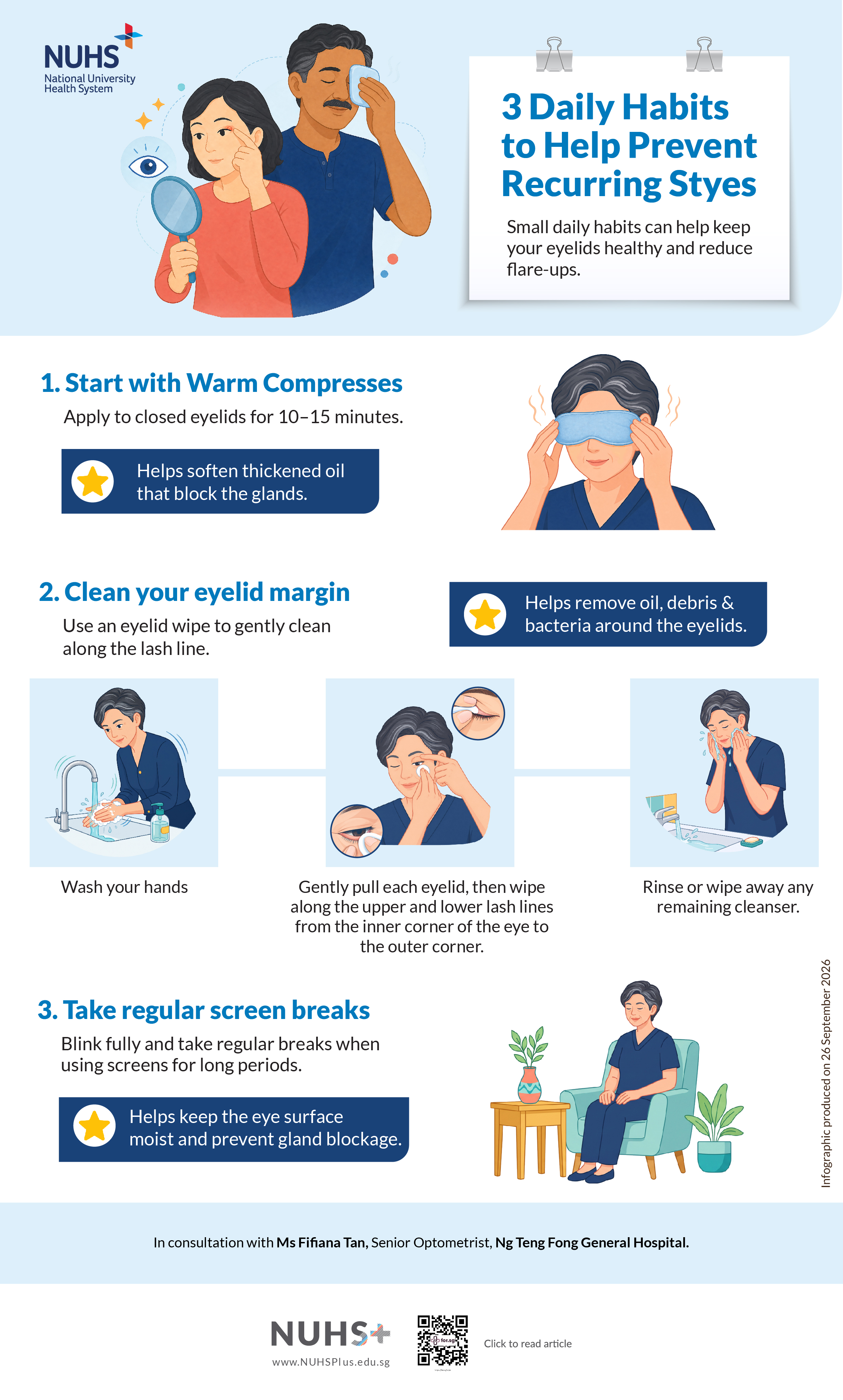
One common misconception is that antibiotics are the main solution for recurring styes. While antibiotics are most useful for treating an active infection, they do not address underlying conditions such as MGD, blepharitis or rosacea. Warm compresses and proper eyelid hygiene remain an important part of managing recurring styes and reducing the risk of future flare-ups.
Getting a thorough assessment
If styes keep coming back, a thorough assessment can help look beyond the lump itself and identify what may be causing the flare-ups.
The initial consultation usually involves questions about how long the stye has been present, whether it has occurred before, and any symptoms such as pain or swelling, as well as questions about eyelid hygiene practices, contact lens wear, cosmetic use, and any underlying health conditions.
The clinician may then carry out a thorough assessment of the eyelid margins and eye surface health, including the tear films and meibomian glands, including gently pressing the glands to assess the quantity and quality of the oil produced.
If needed, meibography may be performed to assess the structure of the meibomian glands within the eyelids. Using infrared light, this imaging test produces detailed images that can reveal structural changes such as gland twisting, enlargement or gland loss.
Together with the patient's symptoms and other clinical findings, this can help guide the next steps in care.
For a warm compress to be effective, the heat needs to be maintained throughout the treatment. Ms Tan recommends maintaining a temperature of around 40°C to 41.5°C to help soften thickened oil in the meibomian glands. As a wet towel can cool quickly, it should be reheated as needed throughout the 10-15 minute duration.
As Ms Tan says: "Patients should avoid touching or squeezing the lesion to prevent the spread of infection to other parts of the eyelids."
If styes persist or keep returning despite first-line care, further treatment may be needed. Topical antibiotics may be considered when there is blepharitis, significant bacterial involvement or widespread infection around the eyelid. For larger or persistent styes that do not improve with treatment, a minor procedure called incision and drainage may be needed. Most patients resume normal activities relatively quickly after the procedure. A follow-up appointment is typically scheduled within one to two weeks to monitor healing.
Most styes improve within one to two weeks with conservative care. If you have a stye that has not gone away despite several months of treatment, or if it keeps recurring in the same location, consider making an appointment with the NTFGH Ophthalmology Service to determine the underlying cause and discuss the most suitable steps for treatment.
In consultation with Ms Fifiana Tan, Senior Optometrist, NTFGH.
Related Articles