How robotics is reshaping chest surgery

Some visuals may appear grainy due to recording constraints in a live operating environment.
PUBLISHED ON
SCROLL DOWN
Inside a robotic-assisted procedure
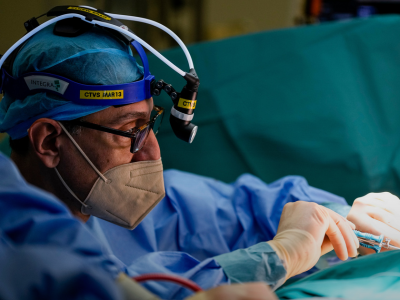
In the operating theatre, robotic arms carried out precise movements as cardiothoracic surgeon Dr Lowell Leow controlled them from a console using a magnified 3D view of the chest.
This was robotic-assisted thoracic surgery, a technique that is increasingly shaping how conditions in the lungs and chest are treated at the National University Heart Centre, Singapore (NUHCS).
Instead of long incisions and rib-spreading, surgeons now worked through small keyhole openings, using instruments that converted their hand movements into controlled action.
For patients, this meant less trauma and a smoother return to daily life. For surgeons, it offered clearer vision and greater control.
A shift in how chest surgery is performed
Robotic-assisted thoracic surgery is part of NUHCS’ minimally invasive practice, giving surgeons greater control during complex chest operations. Its articulated instruments could rotate with the same range as a human wrist, allowing surgeons to sew, dissect and remove tissue in tight spaces.
“The surgeon is still the one performing the operation,” Dr Leow said. “The robot is an instrument that is fully controlled by the surgeon and used to assist the surgery.”
The system’s 3D camera magnified the operating field up to ten times, helping surgeons work safely around major vessels and lung structures. This often reduced blood loss, lowered infection risk and shortened hospital stays.
Sharper vision, steadier hands
Inside the chest, the robotic system provided a stable, enlarged view that traditional tools could not match. Motion scaling and tremor reduction gave surgeons confidence when operating deep within the thoracic cavity. Smaller wounds also meant less pain and quicker mobilisation for patients.
Teamwork behind the technology
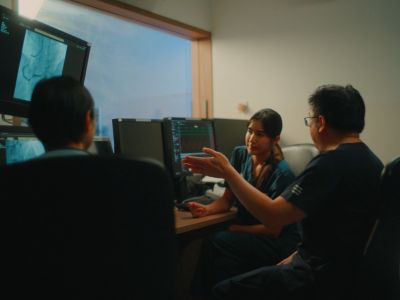
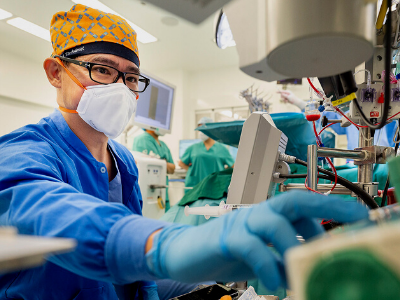
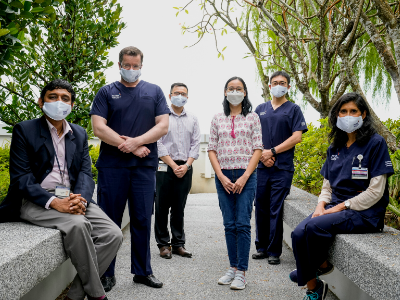
Robotic surgery depended on coordination as much as technology. While Dr Leow worked at the console, nurses and assisting surgeons remained at the patient’s side, changing instruments and adjusting the robotic arms as needed.
A case that tested the limits
One operation remained especially memorable for Dr Leow. A patient had a 10cm tumour close to the heart and lungs, a case that would traditionally require a large incision.
“Some patients wondered whether such a large tumour could be removed with keyhole surgery,” he said. Using the robotic system, the team dissected the tumour safely from surrounding structures. Only one incision needed to be enlarged to extract it fully.
“The surgery was smoother for both the patient and the team with the use of the robot,” he added.
Growing demand, growing potential
After five years of performing robotic procedures, Dr Leow observed a sharp rise in demand. Surgeons from several specialties now shared the same robotic platform, and operating slots were often filled well in advance.
“It is used so commonly now that the queue for the robotic system can be long,” he said. “As the technology improves, the outcomes will become even more convincing.”
He believed that robotic surgery would become increasingly routine. “Just as industries such as aviation and manufacturing have adopted robotics and automation, the future of surgery will feature robotics working alongside surgeons,” he added.
In consultation with Dr Lowell Leow, Consultant, Division of Thoracic Surgery, Department of Cardiac, Thoracic and Vascular Surgery, NUHCS.