Inside clinical trials: The work behind treatments
PUBLISHED ON
SCROLL DOWN
Before new therapies can be approved or adopted into routine care, they must be rigorously tested for safety and efficacy. These studies require careful data collection, much of which takes place outside public view.
At the National University Health System (NUHS), clinical trials span multiple specialities, from childhood cancers to rare genetic diseases, reflecting the scale and complexity of clinical research today.
Behind these studies are clinicians and researchers whose work brings trials into everyday care.
For Prof Allen Yeoh, clinical trials have been closely linked to his work in the treatment of blood cancers in children since the 1990s.
From care to research
He had initially planned to pursue a career in surgery, working in operating theatres. But an early encounter with an adopted infant with cerebral palsy shifted his perspective, particularly after seeing the care shown by the child’s parents.
The experience changed how he viewed medicine and drew him towards paediatric oncology, at a time when survival rates were limited.
Family members had discouraged him from entering paediatric oncology, given the emotional demands of the field. However, the vision of his mentor, Emeritus Prof Quah Thuan Chong, who believed that advances in research could lead to better treatments with fewer side effects, influenced his decision.
Over time, Prof Yeoh came to see that care extended beyond treating the disease, to supporting children and their families in the long term.
He said patients often became like family, and highlighted the resilience of children as they recovered and returned to school and daily life.
When he began his career, families who could afford it often sought treatment overseas. Care locally was less holistic, and support systems were limited.
Working with partners such as the Children’s Cancer Foundation and VIVA Foundation, Prof Yeoh and his colleagues helped build a more supportive care environment. Initiatives such as the Malaysia–Singapore Study Group also paved the way for regional collaboration.
Clinical research became a natural extension of care. Trials provided a structured approach to testing and adopting new treatments, improving outcomes for children over time.
“Clinical trials helped us make more informed treatment decisions. Seeing children recover was especially meaningful. I know this as a father.”
– Prof Allen Yeoh
Beyond oncology
Clinical trial work at NUHS extends beyond cancer care, covering a wide range of conditions from common diseases to rare genetic disorders.
As a Clinical Research Coordinator (CRC), Ms Rebecca Lee supports studies across different disease areas, including trials involving rare genetic conditions.
One such condition is Spinal Muscular Atrophy (SMA), an inherited neuromuscular disorder that affects muscle strength and movement.
Clinical trials in rare disease
In 2022, Ms Lee supported an SMA study involving a genetically targeted therapy delivered by injection at the National University Hospital (NUH).
The treatment subsequently received approval from the United States Food and Drug Administration and became an important treatment option for older children with Type 2 SMA, a form of the condition that affects muscle strength from early childhood.
NUH remains the only site in Singapore conducting this study, which has entered its extension phase to assess long‑term safety and outcomes.
For patients, such trials offer access to therapies that target the underlying genetic cause of disease, rather than managing symptoms alone.
These trials required extensive coordination. Ms Lee worked with multidisciplinary teams that included clinicians, physiotherapists, speech therapists, regulatory offices and sponsors. Her role covered eligibility screening, documentation, medication preparation and scheduling.
In rare disease studies, where patient numbers are small and protocols are tightly defined, even short delays could have significant implications.
Her background in biotechnology enabled her to translate complex scientific requirements into clear processes for patients and families.
Although much of clinical trial work takes place behind the scenes, its impact is evident in patients’ daily lives.
“We saw patients gaining strength, including those who were previously unable to stand but were later able to do so with assistance.”
– Ms Rebecca Lee
While outcomes vary, such improvements illustrate how targeted therapies can alter the course of conditions that previously had limited treatment options.
Clinical trials often involve long‑term participation, with repeated visits and monitoring.
As a CRC, Ms Lee is often the most consistent point of contact for patients and families. She focuses on ensuring they understand what participation involves, using clear, accessible language.
This continuity helps individuals navigate uncertainty and remain engaged throughout the trial process.
Measuring progress
For clinicians, progress is seen in improved outcomes and stronger evidence to guide treatment decisions. For coordinators, it lies in ensuring that studies are conducted safely while patients are supported throughout.
Ms Lee said that clinical trials had advanced medicine and depended on trust between patients, families and healthcare teams.
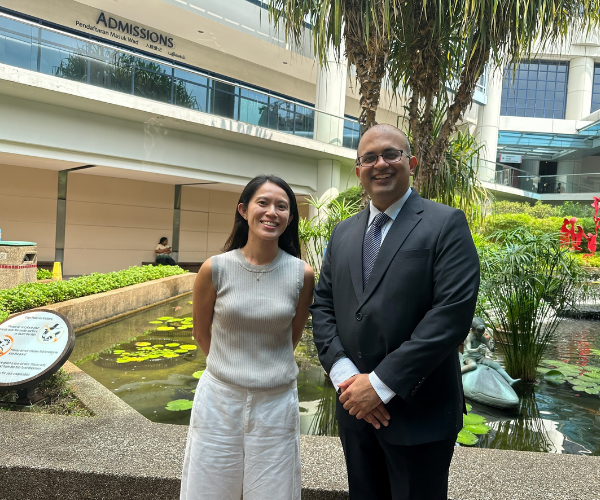
In consultation with Prof Allen Yeoh, Head of Division & Senior Consultant, Division of Paediatric Haematology and Oncology, Department of Paediatrics, Khoo Teck Puat – National University Children’s Medical Institute (KTP‑NUCMI), NUH and Head & Senior Consultant, Division of Paediatric Haematology and Oncology, NCIS; and Rebecca Lee, Senior Clinical Research Coordinator, Unit of Investigational Medicine, NUH.