Transforming science into hope
PUBLISHED ON
SCROLL DOWN
Almost every person carries genetic differences. These variations shape more than appearances.
They influence disease risks, how our bodies respond to treatment, and what we may pass on to future generations.
For decades, our biological code remained beyond everyday clinical care, so illnesses were treated only after symptoms appeared.
Today, advances in genomics and data science are bringing those biological codes into real clinical practice. At NUGEM, these insights are seeping into conversations in clinical care encounters, to guide decisions on prevention, treatment and reproduction.
What emerges is a new model of medicine, one that transforms the entire NUHS ecosystem to be genomics-ready, and brings precise therapy and new hope to patients and their families.
Hope before birth
For some families, precision medicine begins even before a child is born.
Hereditary conditions can make pregnancy uncertain and lead to worry and a loss of hope. But precision medicine that guides reproductive options are offering new possibilities.
Through pre-implantation genetic testing, embryos created via in-vitro fertilisation can be screened for specific life-changing hereditary conditions before pregnancy begins. This reduces the likelihood of passing on serious genetic disorders to the next generation.
For couples at risk of children with serious hereditary conditions, precision medicine offers something profoundly life-changing: the hope of welcoming a healthy child.
Finding answers for patients
For many patients with unexplained or rare conditions, the search for a diagnosis can take years.
Adj A/Prof Chin Hui-Lin, Senior Consultant with the Division of Genetics and Metabolism at the Khoo Teck Puat – National University Children’s Medical Institute (KTP-NUCMI), National University Hospital (NUH), and Adjunct Associate Professor at the NUS Yong Loo Lin School of Medicine (NUS Medicine), said genomic testing is shortening the journey to attain a diagnosis.
By analysing a patient’s genetic code, clinicians can identify the underlying genetic causes for patients with atypical or unexplained clinical presentations, and diagnose novel, rare or atypical conditions. These answers provide hope to families because they can finally understand what is happening. With that, more targeted care can be provided, and unnecessary painful or expensive tests or procedures are avoided.
For many patients and families, genomics testing ends years of uncertainty and offers a clearer path forward.
Predicting risk earlier
Genomic insights can also reveal health risks long before symptoms appear.
Certain hereditary conditions, such as familial hypercholesterolaemia, significantly increase the risk of early heart disease but often remain undetected. Genomic testing allows clinicians to identify these risks early and intervene sooner with monitoring or treatment. This marks a shift in medicine, from reacting to illness to anticipating and managing disease before it develops.
Safer medicines for more patients
Genes also influence how people respond to medication. However, scaling genomic medicine across healthcare systems requires careful implementation.
Every day, thousands of prescriptions are written across hospitals and clinics. Yet, the same drug may work very differently from one patient to another because of genetic variation. This variation is the focus of pharmacogenomics, the study of how genetic differences affect drug response.
Large-scale genomic initiatives have shown more than 90 per cent individuals carry genetic variants that influence how they respond to common medications.
Dr Elaine Lo, Principal Clinical Pharmacist at NUH, Adjunct Assistant Professor at Department of Pharmacy, National University of Singapore (NUS) is helping to integrate pharmacogenomics into routine prescribing.
“Local data from more than 2000 patients found that over 20 per cent carry variants that affect how they respond to medications that have been prescribed to them,” she said.
“These insights help clinicians make more informed prescribing decisions. Doctors can tailor prescriptions to reduce the risk of adverse drug reactions while ensuring patients receive treatments that they are most likely to respond to.”
At NUGEM, pharmacogenomic testing is being implemented across disciplines such as oncology, cardiology, nephrology and neurology.
Turning genomic data into clinical decisions
Yet the human genome contains more than three billion base pairs, far more information than clinicians can interpret alone.
Dr Jared D’Souza, Deputy Chief Medical Informatics Officer at NUHS, explained how digital transformation is enabling genomic data to guide clinical decisions and care pathways.
“Our work involves building clinical decision support tools within the electronic medical record system. Here, we use the patient’s genetic results to guide care in conditions like familial hypercholesterolemia and hereditary breast cancers, or to guide prescriptions,” he said.
These systems allow genetic results and related care recommendations to appear on care providers' screens in clinics and wards, at the point of decision-making.
In time, genetic testing may be performed once in a person's life, with the data used repeatedly to inform care decisions throughout it.
From laboratory discovery to patient care
Behind these clinical insights lies extensive laboratory work.
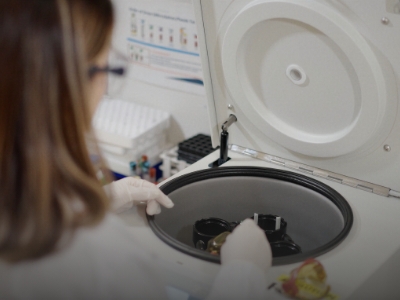
The NUH Genomics Diagnostic Laboratory analyses genomic data to identify genetic variants that can explain or better characterise the disease, so that treatment can be more precise.
A laboratory sited right at where care is provided can allow for prompt results, so that the right decisions can be made at the right time, without any second guesses.
For Dr Desirée du Sart, Principal Scientific Officer in the Department of Laboratory Medicine, NUH, having the genomic laboratory within the hospital enables closer collaboration between care providers and laboratory scientists.
“I can better connect with the care providers, and we can call or meet to discuss cases easily. This allows for a deeper understanding of disease, particularly in complex and ambiguous cases,” she said.
Prompt and more relevant genomics test reports lay the foundation for better care and renewed hope for patients.
Bringing science into real-world care
At NUGEM, clinicians, scientists and pharmacists work together to bring genomics into everyday care.
A/Prof Ng Kar Hui, centre director of NUGEM, believes the impact of genomics will continue to grow.
“In the coming years, genomics and precision medicine will increasingly guide how we diagnose disease, predict risk and tailor treatment,” she said.
At its heart, however, the promise of precision medicine is not only scientific.
By revealing the biological roots of disease, precision medicine is transforming discovery into more precise and personalised treatment, offering patients and families something they recognise immediately:
Hope.
In consultation with A/Prof Ng Kar Hui, Centre Director, NUGEM; Adj A/Prof Chin Hui-Lin, Senior Consultant, Division of Genetics and Metabolism, Department of Paediatrics, KTP-NUCMI, NUH and Adjunct Associate Professor, NUS Medicine; Dr Jared D’Souza, Chief Medical Informatics Officer, NUHS and Senior Consultant, Department of Intensive Care Medicine, Ng Teng Fong General Hospital (NTFGH); Dr Desiréee du Sart, Principal Scientific Officer, NUH; and Dr Elaine Lo, Principal Clinical Pharmacist, NUH.